See You Next Wednesday ~ 3

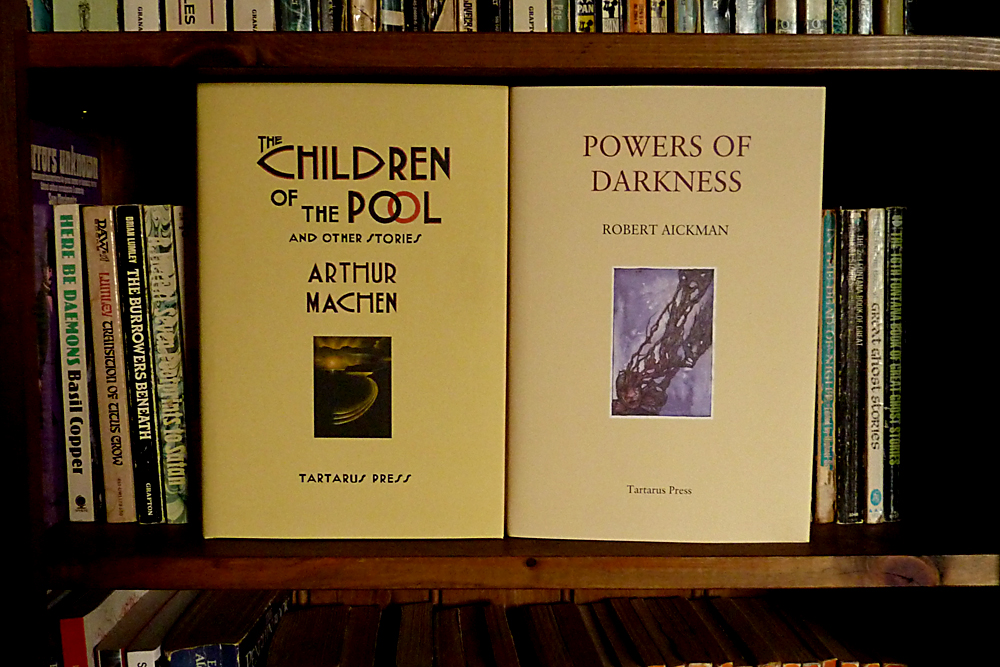
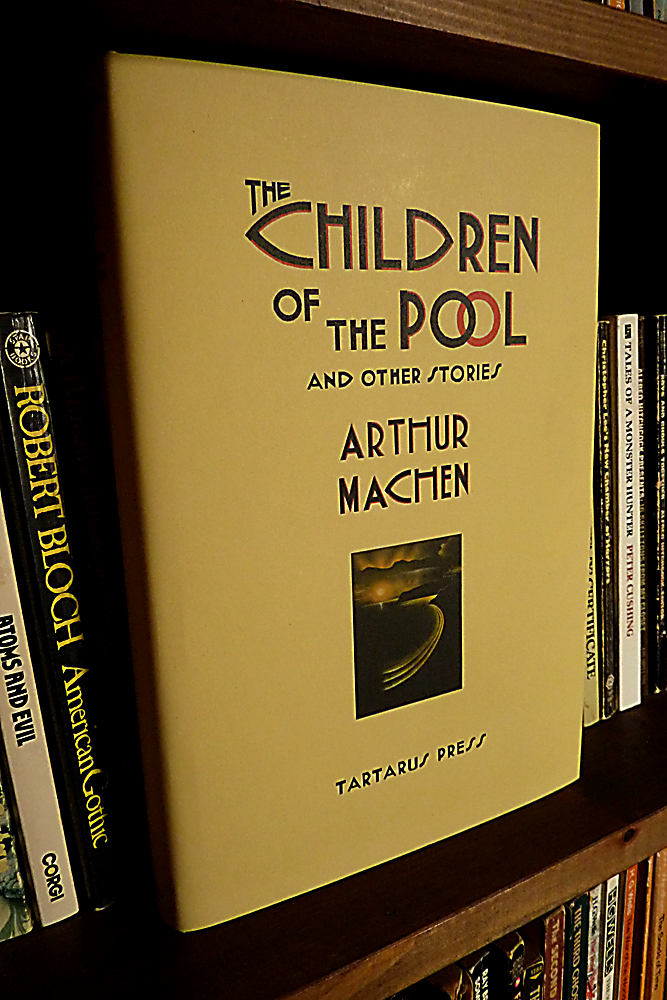
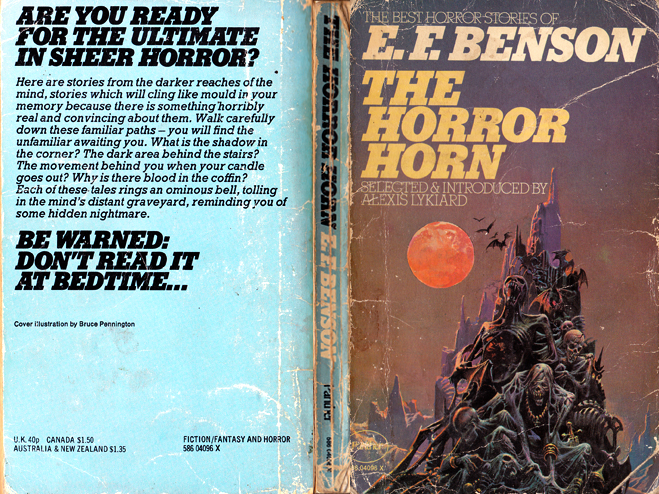
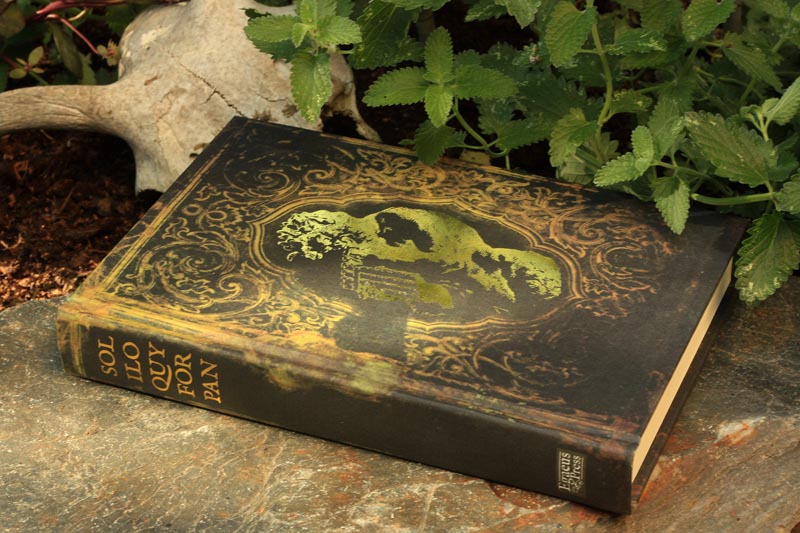
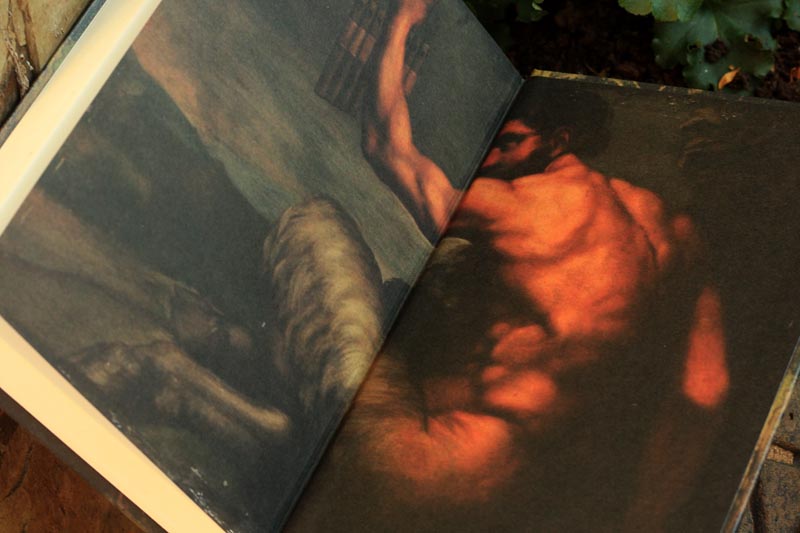
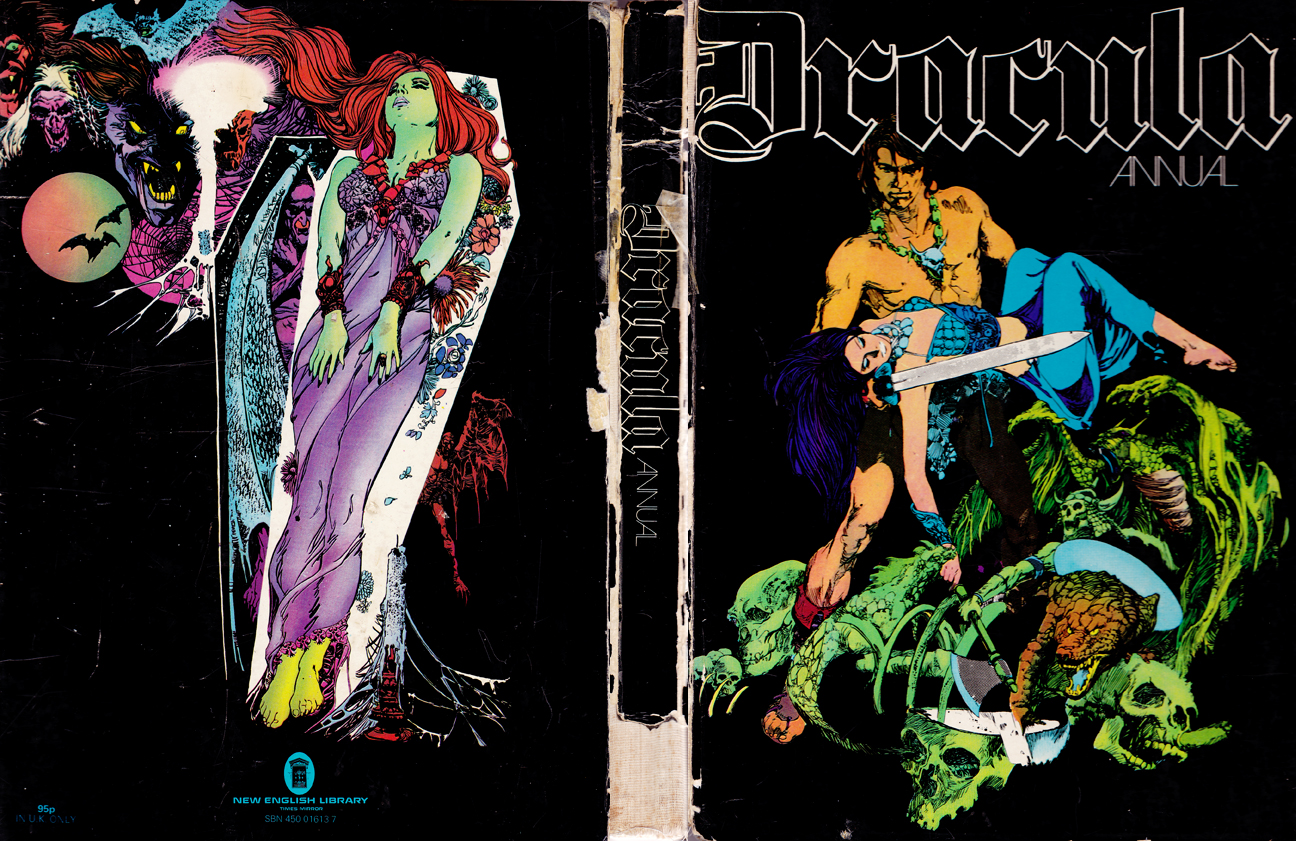
All of these old paperback books I keep harping on about have been a part of my life for the last thirty five years or so. The stories in them are so familiar to me that I sometimes forget that they might be fresh to others. So, each Wednesday I thought I’d share some of my favourites (at least, the out of copyright ones), illustrated with photographs from an even bigger part of my life, Samantha Webster.

Today I thought we’d go for an undisputed classic of the genre. Who better to turn to for this than M. R. James? This one was filmed as part of the BBC’s ‘A Ghost Story for Christmas’ run in 1972 with the wonderful Peter Vaughan taking the lead.

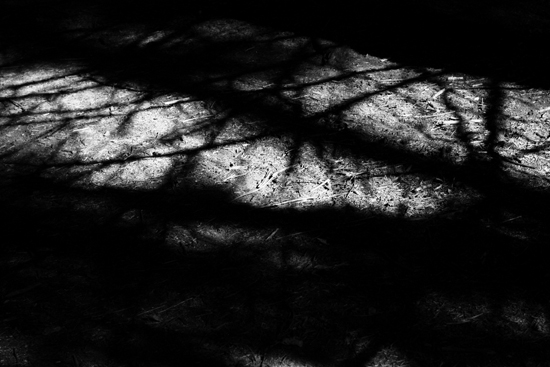
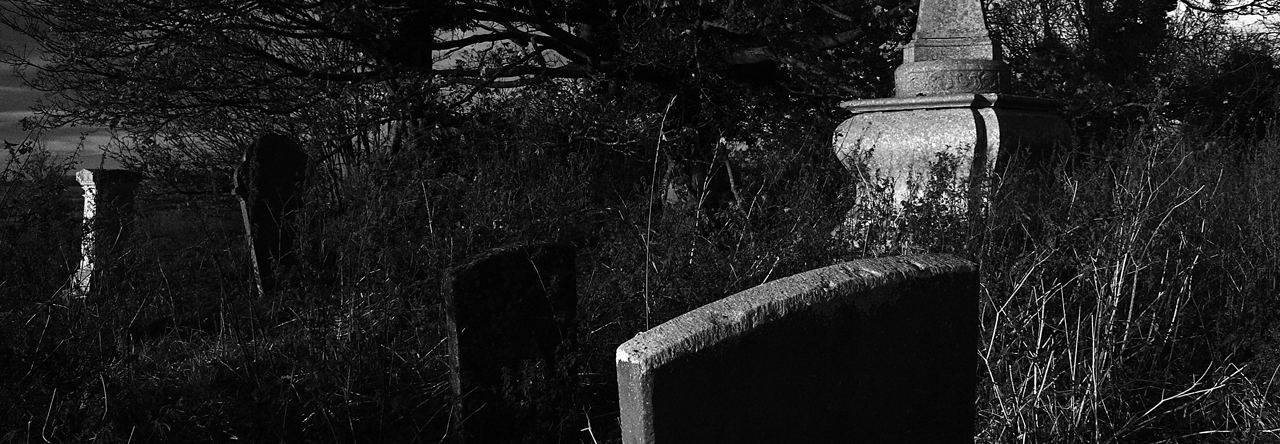
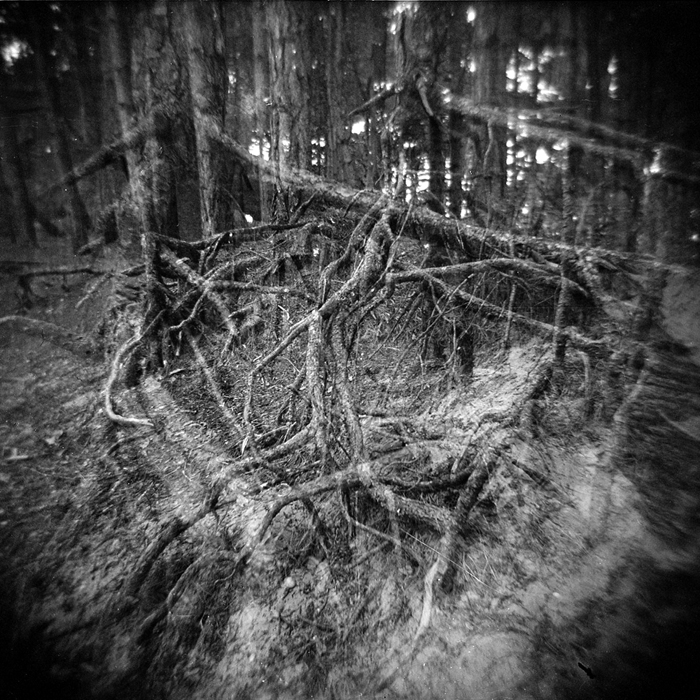
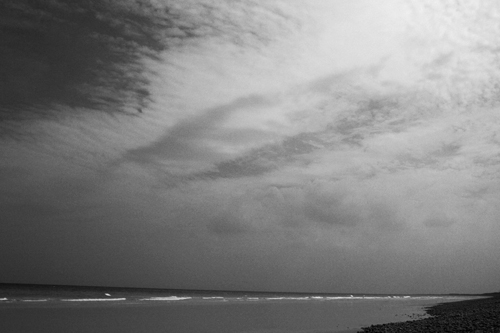
The tale is set in the fictional seaside resort of Seaburgh, which was James thinly disguising Aldeburgh in Suffolk. However, the BBC adaptation was filmed around a particular stretch of the North Norfolk coast which Samantha and I visit often and know very well, hence the photos (the last being a still from the adaptation along with one of me literally following in Peter Vaughan’s footsteps).

A Warning to the Curious

~

M. R. James

The place on the east coast which the reader is asked to consider is Seaburgh. It is not very different now from what I remember it to have been when I was a child. Marshes intersected by dykes to the south, recalling the early chapters of Great Expectations; flat fields to the north, merging into heath; heath, fir woods, and, above all, gorse, inland. A long sea-front and a street: behind that a spacious church of flint, with a broad, solid western tower and a peal of six bells. How well I remember their sound on a hot Sunday in August, as our party went slowly up the white, dusty slope of road towards them, for the church stands at the top of a short, steep incline. They rang with a flat clacking sort of sound on those hot days, but when the air was softer they were mellower too. The railway ran down to its little terminus farther along the same road. There was a gay white windmill just before you came to the station, and another down near the shingle at the south end the town, and yet others on higher ground to the north. There were cottages of bright red brick with slate roofs… but why do I encumber you with these commonplace details? The fact is that they come crowding to the point of the pencil when it begins to write of Seaburgh. I should like to be sure that I had allowed the right ones to get on to the paper. But I forgot. I have not quite done with the word-painting business yet.

Walk away from the sea and the town, pass the station, and turn up the road on the right. It is a sandy road, parallel with the railway, and if you follow it, it climbs to somewhat higher ground. On your left (you are now going northward) is heath, on your right (the side towards the sea) is a belt of old firs, wind-beaten, thick at the top, with the slope that old seaside trees have; seen on the skyline from the train they would tell you in an instant, if you did not know it, that you were approaching a windy coast. Well, at the top of my little hill, a line of these firs strikes out and runs towards the sea, for there is a ridge that goes that way; and the ridge ends in a rather well-defined mound commanding the level fields of rough grass, and a little knot of fir trees crowns it. And here you may sit on a hot spring day, very well content to look at blue sea, white windmills, red cottages, bright green grass, church tower, and distant martello tower on the south.

1


As I have said, I began to know Seaburgh as a child; but a gap of a good many years separates my early knowledge from that which is more recent. Still it keeps its place in my affections, and any tales of it that I pick up have an interest for me. One such tale is this: it came to me in a place very remote from Seaburgh, and quite accidentally, from a man whom I had been able to oblige — enough in his opinion to justify his making me his confidant to this extent.

I know all that country more or less (he said). I used to go to Seaburgh pretty regularly for golf in the spring. I generally put up at the ‘Bear’, with a friend — Henry Long it was, you knew him perhaps —(‘Slightly,’ I said) and we used to take a sitting-room and be very happy there. Since he died I haven’t cared to go there. And I don’t know that I should anyhow after the particular thing that happened on our last visit.

It was in April, 19 —, we were there, and by some chance we were almost the only people in the hotel. So the ordinary public rooms were practically empty, and we were the more surprised when, after dinner, our sitting-room door opened, and a young man put his head in. We were aware of this young man. He was rather a rabbity anaemic subject — light hair and light eyes — but not unpleasing. So when he said: ‘I beg your pardon, is this a private room?’ we did not growl and say: ‘Yes, it is,’ but Long said, or I did — no matter which: ‘Please come in.’ ‘Oh, may I?’ he said, and seemed relieved. Of course it was obvious that he wanted company; and as he was a reasonable kind of person — not the sort to bestow his whole family history on you — we urged him to make himself at home. ‘I dare say you find the other rooms rather bleak,’ I said. Yes, he did: but it was really too good of us, and so on. That being got over, he made some pretense of reading a book. Long was playing Patience, I was writing. It became plain to me after a few minutes that this visitor of ours was in rather a state of fidgets or nerves, which communicated itself to me, and so I put away my writing and turned to at engaging him in talk.

After some remarks, which I forget, he became rather confidential. ‘You’ll think it very odd of me’ (this was the sort of way he began), ‘but the fact is I’ve had something of a shock.’ Well, I recommended a drink of some cheering kind, and we had it. The waiter coming in made an interruption (and I thought our young man seemed very jumpy when the door opened), but after a while he got back to his woes again. There was nobody he knew in the place, and he did happen to know who we both were (it turned out there was some common acquaintance in town), and really he did want a word of advice, if we didn’t mind. Of course we both said: ‘By all means,’ or ‘Not at all,’ and Long put away his cards. And we settled down to hear what his difficulty was.

‘It began,’ he said, ‘more than a week ago, when I bicycled over to Froston, only about five or six miles, to see the church; I’m very much interested in architecture, and it’s got one of those pretty porches with niches and shields. I took a photograph of it, and then an old man who was tidying up in the churchyard came and asked if I’d care to look into the church. I said yes, and he produced a key and let me in. There wasn’t much inside, but I told him it was a nice little church, and he kept it very clean, “But,” I said, “the porch is the best part of it.” We were just outside the porch then, and he said, “Ah, yes, that is a nice porch; and do you know, sir, what’s the meanin’ of that coat of arms there?”

‘It was the one with the three crowns, and though. I’m not much of a herald, I was able to say yes, I thought it was the old arms of the kingdom of East Anglia.

“‘That’s right, sir,” he said, “and do you know the meanin’ of them three crowns that’s on it?”

‘I said I’d no doubt it was known, but I couldn’t recollect to have heard it myself.

‘“Well, then,” he said, “for all you’re a scholard, I can tell you something you don’t know. Them’s the three ‘oly crowns what was buried in the ground near by the coast to keep the Germans from landing — ah, I can see you don’t believe that. But I tell you, if it hadn’t have been for one of them ‘oly crowns bein’ there still, them Germans would a landed here time and again, they would. Landed with their ships, and killed man, woman and child in their beds. Now then, that’s the truth what I’m telling you, that is; and if you don’t believe me, you ast the rector. There he comes: you ast him, I says.”

‘I looked round, and there was the rector, a nice-looking old man, coming up the path; and before I could begin assuring my old man, who was getting quite excited, that I didn’t disbelieve him, the rector struck in, and said:

“‘What’s all this about, John? Good day to you, sir. Have you been looking at our little church?”’

‘So then there was a little talk which allowed the old man to calm down, and then the rector asked him again what was the matter.

“‘Oh,” he said, “it warn’t nothink, only I was telling this gentleman he’d ought to ast you about them ‘oly crowns.”

‘“Ah, yes, to be sure,” said the rector, “that’s a very curious matter, isn’t it? But I don’t know whether the gentleman is interested in our old stories, eh?”

‘“Oh, he’ll be interested fast enough,” says the old man, “he’ll put his confidence in what you tells him, sir; why, you known William Ager yourself, father and son too.”

‘Then I put in a word to say how much I should like to hear all about it, and before many minutes I was walking up the village street with the rector, who had one or two words to say to parishioners, and then to the rectory, where he took me into his study. He had made out, on the way, that I really was capable of taking an intelligent interest in a piece of folklore, and not quite the ordinary tripper. So he was very willing to talk, and it is rather surprising to me that the particular legend he told me has not made its way into print before. His account of it was this: “There has always been a belief in these parts in the three holy crowns. The old people say they were buried in different places near the coast to keep off the Danes or the French or the Germans. And they say that one of the three was dug up a long time ago, and another has disappeared by the encroaching of the sea, and one’s still left doing its work, keeping off invaders. Well, now, if you have read the ordinary guides and histories of this county, you will remember perhaps that in 1687 a crown, which was said to be the crown of Redwald, King of the East Angles, was dug up at Rendlesham, and alas! alas! melted down before it was even properly described or drawn. Well, Rendlesham isn’t on the coast, but it isn’t so very far inland, and it’s on a very important line of access. And I believe that is the crown which the people mean when they say that one has been dug up. Then on the south you don’t want me to tell you where there was a Saxon royal palace which is now under the sea, eh? Well, there was the second crown, I take it. And up beyond these two, they say, lies the third.”

‘“Do they say where it is?” of course I asked.

‘He said, “Yes, indeed, they do, but they don’t tell,” and his manner did not encourage me to put the obvious question. Instead of that I waited a moment, and said: “What did the old man mean when he said you knew William Ager, as if that had something to do with the crowns?”

‘“To be sure,” he said, “now that’s another curious story. These Agers it’s a very old name in these parts, but I can’t find that they were ever people of quality or big owners these Agers say, or said, that their branch of the family were the guardians of the last crown. A certain old Nathaniel Ager was the first one I knew — I was born and brought up quite near here — and he, I believe, camped out at the place during the whole of the war of 1870. William, his son, did the same, I know, during the South African War. And young William, his son, who has only died fairly recently, took lodgings at the cottage nearest the spot; and I’ve no doubt hastened his end, for he was a consumptive, by exposure and night watching. And he was the last of that branch. It was a dreadful grief to him to think that he was the last, but he could do nothing, the only relations at all near to him were in the colonies. I wrote letters for him to them imploring them to come over on business very important to the family, but there has been no answer. So the last of the holy crowns, if it’s there, has no guardian now.”

‘That was what the rector told me, and you can fancy how interesting I found it. The only thing I could think of when I left him was how to hit upon the spot where the crown was supposed to be. I wish I’d left it alone.

‘But there was a sort of fate in it, for as I bicycled back past the churchyard wall my eye caught a fairly new gravestone, and on it was the name of William Ager. Of course I got off and read it. It said “of this parish, died at Seaburgh, 19 —, aged 28.”‘There it was, you see. A little judicious questioning in the right place, and I should at least find the cottage nearest the spot. Only I didn’t quite know what was the right place to begin my questioning at. Again there was fate: it took me to the curiosity-shop down that way — you know — and I turned over some old books, and, if you please, one was a prayer-book of 1740 odd, in a rather handsome binding — I’ll just go and get it, it’s in my room.’

He left us in a state of some surprise, but we had hardly time to exchange any remarks when he was back, panting, and handed us the book opened at the fly-leaf, on which was, in a straggly hand:

‘Nathaniel Ager is my name and England is my nation,

Seaburgh is my dwelling-place and Christ is my Salvation,

When I am dead and in my Grave, and all my bones are rotton,

I hope the Lord will think on me when I am quite forgotton.’

This poem was dated 1754, and there were many more entries of Agers, Nathaniel, Frederick, William, and so on, ending with William, 19 —.

‘You see,’ he said, ‘anybody would call it the greatest bit of luck. I did, but I don’t now. Of course I asked the shopman about William Ager, and of course he happened to remember that he lodged in a cottage in the North Field and died there. This was just chalking the road for me. I knew which the cottage must be: there is only one sizable one about there. The next thing was to scrape some sort of acquaintance with the people, and I took a walk that way at once. A dog did the business for me: he made at me so fiercely that they had to run out and beat him off, and then naturally begged my pardon, and we got into talk. I had only to bring up Ager’s name, and pretend I knew, or thought I knew something of him, and then the woman said how sad it was him dying so young, and she was sure it came of him spending the night out of doors in the cold weather. Then I had to say: “Did he go out on the sea at night?” and she said: “Oh, no, it was on the hillock yonder with the trees on it.” And there I was.

‘I know something about digging in these barrows: I’ve opened many of them in the2 down country. But that was with owner’s leave, and in broad daylight and with men to help. I had to prospect very carefully here before I put a spade in: I couldn’t trench across the mound, and with those old firs growing there I knew there would be awkward tree roots. Still the soil was very light and sandy and easy, and there was a rabbit hole or so that might be developed into a sort of tunnel. The going out and coming back at odd hours to the hotel was going to be the awkward part. When I made up my mind about the way to excavate I told the people that I was called away for a night, and I spent it out there. I made my tunnel: I won’t bore you with the details of how I supported it and filled it in when I’d done, but the main thing is that I got the crown.’

Naturally we both broke out into exclamations of surprise and interest. I for one had long known about the finding of the crown at Rendlesham and had often lamented its fate. No one has ever seen an Anglo–Saxon crown — at least no one had. But our man gazed at us with a rueful eye. ‘Yes,’ he said, ‘and the worst of it is I don’t know how to put it back.’

‘Put it back?’ we cried out. ‘Why, my dear sir, you’ve made one of the most exciting finds ever heard of in this country. Of course it ought to go to the Jewel House at the Tower. What’s your difficulty? If you’re thinking about the owner of the land, and treasure-trove, and all that, we can certainly help you through. Nobody’s going to make a fuss about technicalities in a case of this kind.’

Probably more was said, but all he did was to put his face in his hands, and mutter: ‘I don’t know how to put it back.’

At last Long said: ‘You’ll forgive me, I hope, if I seem impertinent, but are you quite sure you’ve got it?’ I was wanting to ask much the same question myself, for of course the story did seem a lunatic’s dream when one thought over it. But I hadn’t quite dared to say what might hurt the poor young man’s feelings. However, he took it quite calmly — really, with the calm of despair, you might say. He sat up and said: ‘Oh, yes, there’s no doubt of that: I have it here, in my room, locked up in my bag. You can come and look at it if you like: I won’t offer to bring it here.’

We were not likely to let the chance slip. We went with him; his room was only a few doors off. The boots was just collecting shoes in the passage: or so we thought: afterwards we were not sure. Our visitor — his name was Paxton — was in a worse state of shivers than before, and went hurriedly into the room, and beckoned us after him, turned on the light, and shut the door carefully. Then he unlocked his kit-bag, and produced a bundle of clean pocket-handkerchiefs in which something was wrapped, laid it on the bed, and undid it. I can now say I have seen an actual Anglo–Saxon crown. It was of silver — as the Rendlesham one is always said to have been — it was set with some gems, mostly antique intaglios and cameos, and was of rather plain, almost rough workmanship. In fact, it was like those you see on the coins and in the manuscripts. I found no reason to think it was later than the ninth century. I was intensely interested, of course, and I wanted to turn it over in my hands, but Paxton prevented me. ‘Don’t you touch it,’ he said, ‘I’ll do that.’ And with a sigh that was, I declare to you, dreadful to hear, he took it up and turned it about so that we could see every part of it. ‘Seen enough?’ he said at last, and we nodded. He wrapped it up and locked it in his bag, and stood looking at us dumbly. ‘Come back to our room,’ Long said, ‘and tell us what the trouble is.’ He thanked us, and said: ‘Will you go first and see if — if the coast is clear?’ That wasn’t very intelligible, for our proceedings hadn’t been, after all, very suspicious, and the hotel, as I said, was practically empty. However, we were beginning to have inklings of — we didn’t know what, and anyhow nerves are infectious. So we did go, first peering out as we opened the door, and fancying (I found we both had the fancy) that a shadow, or more than a shadow — but it made no sound — passed from before us to one side as we came out into the passage. ‘It’s all right,’ we whispered to Paxton — whispering seemed the proper tone — and we went, with him between us, back to our sitting-room. I was preparing, when we got there, to be ecstatic about the unique interest of what we had seen, but when I looked at Paxton I saw that would be terribly out of place, and I left it to him to begin.

‘What is to be done?’ was his opening. Long thought it right (as he explained to me afterwards) to be obtuse, and said: ‘Why not find out who the owner of the land is, and inform —’ Oh, no, no!’ Paxton broke in impatiently, ‘I beg your pardon: you’ve been very kind, but don’t you see it’s got to go back, and I daren’t be there at night, and daytime’s impossible. Perhaps, though, you don’t see: well, then, the truth is that I’ve never been alone since I touched it.’ I was beginning some fairly stupid comment, but Long caught my eye, and I stopped. Long said: ‘I think I do see, perhaps: but wouldn’t it be a relief — to tell us a little more clearly what the situation is?’

Then it all came out: Paxton looked over his shoulder and beckoned to us to come nearer to him, and began speaking in a low voice: we listened most intently, of course, and compared notes afterwards, and I wrote down our version, so I am confident I have what he told us almost word for word. He said: ‘It began when I was first prospecting, and put me off again and again. There was always somebody — a man — standing by one of the firs. This was in daylight, you know. He was never in front of me. I always saw him with the tail of my eye on the left or the right, and he was never there when I looked straight for him. I would lie down for quite a long time and take careful observations, and make sure there was no one, and then when I got up and began prospecting again, there he was. And he began to give me hints, besides; for wherever I put that prayer-book — short of locking it up, which I did at last — when I came back to my loom it was always out on my table open at the fly-leaf where the names are, and one of my razors across it to keep it open. I’m sure he just can’t open my bag, or something more would have happened. You see, he’s light and weak, but all the same I daren’t face him. Well, then, when I was making the tunnel, of course it was worse, and if I hadn’t been so keen I should have dropped the whole thing and run. It was like someone scraping at my back all the time: I thought for a long time it was only soil dropping on me, but as I got nearer the — the crown, it was unmistakable. And when I actually laid it bare and got my fingers into the ring of it and pulled it out, there came a sort of cry behind 3me — oh, I can’t tell you how desolate it was! And horribly threatening too.It spoilt all my pleasure in my find — cut it off that moment. And if I hadn’t been the wretched fool I am, I should have put the thing back and left it. But I didn’t. The rest of the time was just awful. I had hours to get through before I could decently come back to the hotel. First I spent time filling up my tunnel and covering my tracks, and all the while he was there trying to thwart me. Sometimes, you know, you see him, and sometimes you don’t, just as he pleases, I think: he’s there, but he has some power over your eyes. Well, I wasn’t off the spot very long before sunrise, and then I had to get to the junction for Seaburgh, and take a train back. And though it was daylight fairly soon, I don’t know if that made it much better. There were always hedges, or gorse-bushes, or park fences along the road — some sort of cover, I mean — and I was never easy for a second. And then when I began to meet people going to work, they always looked behind me very strangely: it might have been that they were surprised at seeing anyone so early; but I didn’t think it was only that, and I don’t now: they didn’t look exactly at me. And the porter at the train was like that too. And the guard held open the door after I’d got into the carriage — just as he would if there was somebody else coming, you know. Oh, you may be very sure it isn’t my fancy,’ he said with a dull sort of laugh. Then he went on: ‘And even if I do get it put back, he won’t forgive me: I can tell that. And I was so happy a fortnight ago.’ He dropped into a chair, and I believe he began to cry.
We didn’t know what to say, but we felt we must come to the rescue somehow, and so — it really seemed the only thing — we said if he was so set on putting the crown back in its place, we would help him. And I must say that after what we had heard it did seem the right thing. If these horrid consequences had come on this poor man, might there not really be something in the original idea of the crown having some curious power bound up with it, to guard the coast? At least, that was my feeling, and I think it was Long’s too. Our offer was very welcome to Paxton, anyhow. When could we do it? It was nearing half-past ten. Could we contrive to make a late walk plausible to the hotel people that very night? We looked out of the window: there was a brilliant full moon — the Paschal moon. Long undertook to tackle the boots and propitiate him. He was to say that we should not be much over the hour, and if we did find it so pleasant that we stopped out a bit longer we would see that he didn’t lose by sitting up. Well, we were pretty regular customers of the hotel, and did not give much trouble, and were considered by the servants to be not under the mark in the way of tips; and so the boots was propitiated, and let us out on to the sea-front, and remained, as we heard later, looking after us. Paxton had a large coat over his arm, under which was the wrapped-up crown.

So we were off on this strange errand before we had time to think how very much out of the way it was. I have told this part quite shortly on purpose, for it really does represent the haste with which we settled our plan and took action. ‘The shortest way is up the hill and through the churchyard,’ Paxton said, as we stood a moment before, the hotel looking up and down the front. There was nobody about — nobody at all. Seaburgh out of the season is an early, quiet place. ‘We can’t go along the dyke by the cottage, because of the dog,’ Paxton also said, when I pointed to what I thought a shorter way along the front and across two fields. The reason he gave was good enough. We went up the road to the church, and turned in at the churchyard gate. I confess to having thought that there might be some one lying there who might be conscious of our business: but if it was so, they were also conscious that one who was on their side, so to say, had us under surveillance, and we saw no sign of them. But under observation we felt we were, as I have never felt it at another time. Specially was it so when we passed out of the churchyard into a narrow path with close high hedges, through which we hurried as Christian did through that Valley; and so got out into open fields. Then along hedges, though I world sooner have been in the open, where I could see if anyone was visible behind me; over a gate or two, and then a swerve to the left, taking us up on to the ridge which ended in that mound.

As we neared it, Henry Long felt, and I felt too, that there were what I can only call dim presences waiting for us, as well as a far more actual one attending us. Of 4Paxton’s agitation all this time I can give you no adequate picture: he breathed like a hunted beast, and we could not either of us look at his face. How he would manage when we got to the very place we had not troubled to think: he had seemed so sure that that would not be difficult. Nor was it. I never saw anything like the dash with which he flung himself at a particular spot in the side of the mound, and tore at it, so that in a very few minutes the greater part of his body was out of sight. We stood holding the coat and that bundle of handkerchiefs, and looking, very fearfully, I must admit, about us. There was nothing to be seen: a line of dark firs behind us made one skyline, more trees and the church tower half a mile off on the right, cottages and a windmill on the horizon on the left, calm sea dead in front, faint barking of a dog at a cottage on a gleaming dyke between us and it: full moon making that path we know across the sea: the eternal whisper of the Scotch firs just above us, and of the sea in front. Yet, in all this quiet, an acute, an acrid consciousness of a restrained hostility very near us, like a dog on a leash that might be let go at any moment.

Paxton pulled himself out of the hole, and stretched a hand back to us. ‘Give it to me,’ he whispered, ‘unwrapped.’ We pulled off the handkerchiefs, and he took the crown. The moonlight just fell on it as he snatched it. We had not ourselves touched that bit of metal, and I have thought since that it was just as well. In another moment Paxton was out of the hole again and busy shovelling back the soil with hands that were already bleeding He would have none of our help though It was much the longest part of the job to get the place to look undisturbed yet — I don’t know how — he made a wonderful success of it. At last he was satisfied and we turned back.

We were a couple of hundred yards from the hill when Long suddenly said to him: ‘I say you’ve left your coat there. That won’t do. See?’ And I certainly did see it — the long dark overcoat lying where the tunnel had been. Paxton had not stopped, however: he only shook his head, and held up the coat on his arm. And when we joined him, he said, without any excitement, but as if nothing mattered any more: ‘That wasn’t my coat.’ And, indeed, when we looked back again, that dark thing was not to be seen.

Well, we got out on to the road, and came rapidly back that way. It was well before twelve when we got in, trying to put a good face on it, and saying — Long and I — what a lovely night it was for a walk. The boots was on the look-out for us, and we made remarks like that for his edification as we entered the hotel. He gave another look up and down the sea-front before he locked the front door, and said: ‘You didn’t meet many people about, I s’pose, sir?’ ‘No, indeed, not a soul,’ I said; at which I remember Paxton looked oddly at me. ‘Only I thought I see someone turn up the station road after you gentlemen,’ said the boots. ‘Still, you was three together, and I don’t suppose he meant mischief.’ I didn’t know what to say; Long merely said ‘Good night,’ and we went off upstairs, promising to turn out all lights, and to go to bed in a few minutes.

Back in our room, we did our very best to make Paxton take a cheerful view. There’s the crown safe back,’ we said; ‘very likely you’d have done better not to touch it’ (and he heavily assented to that), ‘but no real harm has been done, and we shall never give this away to anyone who would be so mad as to go near it. Besides, don’t you feel better yourself? I don’t mind confessing,’ I said, ‘that on the way there I was very much inclined to take your view about — well, about being followed; but going back, it wasn’t at all the same thing, was it?’ No, it wouldn’t do: ‘You’ve nothing to trouble yourselves about,’ he said, ‘but I’m not forgiven. I’ve got to pay for that miserable sacrilege still. I know what you are going to say. The Church might help. Yes, but it’s the body that has to suffer. It’s true I’m not feeling that he’s waiting outside for me just now. But —’ Then he stopped. Then he turned to thanking us, and we put him off as soon as we could. And naturally we pressed him to use our sitting-room next day, and said we should be glad to go out with him. Or did he play golf, perhaps? Yes, he did, but he didn’t think he should care about that tomorrow. Well, we recommended him to get up late and sit in our room in the morning while we were playing, and we would have a walk later in the day. He was very submissive and piano about it all: ready to do just what we thought best, but clearly quite certain in his own mind that what was coming could not be averted or palliated. You’ll wonder why we didn’t insist on accompanying him to his home and seeing him safe into the care of brothers or someone. The fact was he had nobody. He had had a flat in town, but lately he had made up his mind to settle for a time in Sweden, and he had dismantled his flat and shipped off his belongings, and was whiling away a fortnight or three weeks before he made a start. Anyhow, we didn’t see what we could do better than sleep on it — or not sleep very much, as was my case and see what we felt like tomorrow morning.

We felt very different, Long and I, on as beautiful an April morning as you could desire; and Paxton also looked very different when we saw him at breakfast. ‘The first approach to a decent night I seem ever to have had,’ was what he said. But he was going to do as we had settled: stay in probably all the morning, and come out with us later. We went to the links; we met some other men and played with them in the morning, and had lunch there rather early, so as not to be late back. All the same, the snares of death overtook him.

Whether it could have been prevented, I don’t know. I think he would have been got at somehow, do what we might. Anyhow, this is what happened.

We went straight up to our room. Paxton was there, reading quite peaceably. ‘Ready to come out shortly?’ said Long, ‘say in half an hour’s time?’ ‘Certainly,’ he said: and I said we would change first, and perhaps have baths, and call for him in half an hour. I had my bath first, and went and lay down on my bed, and slept for about ten minutes. We came out of our rooms at the same time, and went together to the sitting-room. Paxton wasn’t there — only his book. Nor was he in his room, nor in the downstair rooms. We shouted for him. A servant came out and said: ‘Why, I thought you gentlemen was gone out already, and so did the other gentleman. He heard you a-calling from the path there, and run out in a hurry, and I looked out of the coffee-room window, but I didn’t see you. ‘Owever, he run off down the beach that way.’

Without a word we ran that way too — it was the opposite direction to that of last night’s expedition. It wasn’t quite four o’clock, and the day was fair, though not so fair as it had been, so that was really no reason, you’d say, for anxiety: with people about, surely a man couldn’t come to much harm.

But something in our look as we ran out must have struck the servant, for she came out on the steps, and pointed, and said, ‘Yes, that’s the way he went.’ We ran on as far as the top of the shingle bank, and there pulled up. There was a choice of ways: past the houses on the sea-front, or along the sand at the bottom of the beach, which, the tide being now out, was fairly broad. Or of course we might keep along the shingle between these two tracks and have some view of both of them; only that was heavy going. We chose the sand, for that was the loneliest, and someone might come to harm there without being seen from the public path.

Long said he saw Paxton some distance ahead, running and waving his stick, as if he wanted to signal to people who were on ahead of him. I couldn’t be sure: one of these sea-mists was coming up very quickly from the south. There was someone, that’s all I could say. And there were tracks on the sand as of someone running who wore shoes; and there were other tracks made before those — for the shoes sometimes trod in them and interfered with them — of someone not in shoes. Oh, of course, it’s only my word you’ve got to take for all this: Long’s dead, we’d no time or means to make sketches or take casts, and the next tide washed everything away. All we could do was to notice these marks as we hurried on. But there they were over and over again, and we had no doubt whatever that what we saw was the track of a bare foot, and one that showed more bones than flesh.

The notion of Paxton running after — after anything like this, and supposing it to be the friends he was looking for, was very dreadful to us. You can guess what we fancied: how the thing he was following might stop suddenly and turn round on him, and what sort of face it would show, half-seen at first in the mist — which all the while was getting thicker and thicker. And as I ran on wondering how the poor wretch could have been lured into mistaking that other thing for us, I remembered his saying, ‘He has some power over your eyes.’ And then I wondered what the end would be, for I had no hope now that the end could be averted, and — well, there is no need to tell all the dismal and horrid thoughts that flitted through my head as we ran on into the mist. It was uncanny, too, that the sun should still be bright in the sky and we could see nothing. We could only tell that we were now past the houses and had reached that gap there is between them and the old martello tower. When you are past the tower, you know, there is nothing but shingle for a long way — not a house, not a human creature; just that spit of land, or rather shingle, with the river on your right and the sea on your left.
5

But just before that, just by the martello tower, you remember there is the old battery, close to the sea. I believe there are only a few blocks of concrete left now: the rest has all been washed away, but at this time there was a lot more, though the place was a ruin. Well, when we got there, we clambered to the top as quick as we could to take breath and look over the shingle in front if by chance the mist would let us see anything. But a moment’s rest we must have. We had run a mile at least. Nothing whatever was visible ahead of us, and we were just turning by common consent to get down and run hopelessly on, when we heard what I can only call a laugh: and if you can understand what I mean by a breathless, a lungless laugh, you have it: but I don’t suppose you can. It came from below, and swerved away into the mist. That was enough. We bent over the wall. Paxton was there at the bottom.

You don’t need to be told that he was dead. His tracks showed that he had run along the side of the battery, had turned sharp round the corner of it, and, small doubt of it, must have dashed straight into the open arms of someone who was waiting there. His mouth was full of sand and stones, and his teeth and jaws were broken to bits. I only glanced once at his face.

At the same moment, just as we were scrambling down from the battery to get to the body, we heard a shout, and saw a man running down the bank of the martello tower. He was the caretaker stationed there, and his keen old eyes had managed to descry through the mist that something was wrong. He had seen Paxton fall, and had seen us a moment after, running up — fortunate this, for otherwise we could hardly have escaped suspicion of being concerned in the dreadful business. Had he, we asked, caught sight of anybody attacking our friend? He could not be sure.

We sent him off for help, and stayed by the dead man till they came with the stretcher. It was then that we traced out how he had come, on the narrow fringe of sand under the battery wall. The rest was shingle, and it was hopelessly impossible to tell whither the other had gone.

What were we to say at the inquest? It was a duty, we felt, not to give up, there and then, the secret of the crown, to be published in every paper. I don’t know how much you would have told; but what we did agree upon was this: to say that we had only made acquaintance with Paxton the day before, and that he had told us he was under some apprehension of danger at the hands of a man called William Ager. Also that we had seen some other tracks besides Paxton’s when we followed him along the beach. But of course by that time everything was gone from the sands.

No one had any knowledge, fortunately, of any William Ager living in the district. The evidence of the man at the martello tower freed us from all suspicion. All that could be done was to return a verdict of wilful murder by some person or persons unknown.

Paxton was so totally without connections that all the inquiries that were subsequently made ended in a No Thoroughfare. And I have never been at Seaburgh, or even near it, since.

WARNING TO THE CURIOUS 2


See You Next Wednesday ~ 2

All of these old paperback books I keep harping on about have been a part of my life for the last thirty five years or so. The stories in them are so familiar to me that I sometimes forget that they might be fresh to others. So, each Wednesday I thought I’d share some of my favourites (at least, the out of copyright ones), illustrated with photographs from an even bigger part of my life, Samantha Webster.

This evening I thought we could wallow in a little 19th Century French Decadence and indulge in one of the finest vampire tales ever written. This one is from  Théophile Gautier and has the original French title of La Morte Amoureuse. So, let’s dig out our absinthe spoons from the back of the drawer and settle down to a tale of true Romanticism, heavy in imagery and dripping with symbolism.

C L A R I M O N D E

~

T h é o p h i l e  G a u t i e r


Brother, you ask me if I have ever loved. Yes. My story is a strange and terrible one; and though I am sixty-six years of age, I scarcely dare even now to disturb the ashes of that memory. To you I can refuse nothing; but I should not relate such a tale to any less experienced mind. So strange were the circumstances of my story, that I can scarcely believe myself to have ever actually been a party to them. For more than three years I remained the victim of a most singular and diabolical illusion. Poor country priest though I was, I led every night in a dream—would to God it had been all a dream!—a most worldly life, a damning life, a life of Sardanapalus. One single look too freely cast upon a woman well-nigh caused me to lose my soul; but finally by the grace of God and the assistance of my patron saint, I succeeded in casting out the evil spirit that possessed me. My daily life was long interwoven with a nocturnal life of a totally different character. By day I was a priest of the Lord, occupied with prayer and sacred things; by night, from the instant that I closed my eyes I became a young nobleman, a fine connoisseur in women, dogs, and horses; gambling, drinking, and blaspheming; and when I awoke at early daybreak, it seemed to me, on the other hand, that I had been sleeping, and had only dreamed that I was a priest. Of this somnambulistic life there now remains to me only the recollection of certain scenes and words which I cannot banish from my memory; but although I never actually left the walls of my presbytery, one would think to hear me speak that I were a man who, weary of all worldly pleasures, had become a religious, seeking to end a tempestuous life in the service of God, rather than a humble seminarist who has grown old in this obscure curacy, situated in the depths of the woods and even isolated from the life of the century.

Yes, I have loved as none in the world ever loved—with an insensate and furious passion—so violent that I am astonished it did not cause my heart to burst asunder. Ah, what nights—what nights!

From my earliest childhood I had felt a vocation to the priesthood, so that all my studies were directed with that idea in view. Up to the age of twenty-four my life had been only a prolonged novitiate. Having completed my course of theology I successively received all the minor orders, and my superiors judged me worthy, despite my youth, to pass the last awful degree. My ordination was fixed for Easter week.

I had never gone into the world. My world was confined by the walls of the college and the seminary. I knew in a vague sort of a way that there was something called Woman, but I never permitted my thoughts to dwell on such a subject, and I lived in a state of perfect innocence. Twice a year only I saw my infirm and aged mother, and in those visits were comprised my sole relations with the outer world.

I regretted nothing; I felt not the least hesitation at taking the last irrevocable step; I was filled with joy and impatience. Never did a betrothed lover count the slow hours with more feverish ardour; I slept only to dream that I was saying mass; I believed there could be nothing in the world more delightful than to be a priest; I would have refused to be a king or a poet in preference. My ambition could conceive of no loftier aim.

I tell you this in order to show you that what happened to me could not have happened in the natural order of things, and to enable you to understand that I was the victim of an inexplicable fascination.

At last the great day came. I walked to the church with a step so light that I fancied myself sustained in air, or that I had wings upon my shoulders. I believed myself an angel, and wondered at the sombre and thoughtful faces of my companions, for there were several of us. I had passed all the night in prayer, and was in a condition wellnigh bordering on ecstasy. The bishop, a venerable old man, seemed to me God the Father leaning over His Eternity, and I beheld Heaven through the vault of the temple.

You well know the details of that ceremony—the benediction, the communion under both forms, the anointing of the palms of the hands with the Oil of Catechumens, and then the holy sacrifice offered in concert with the bishop.

Ah, truly spake Job when he declared that the imprudent man is one who hath not made a covenant with his eyes! I accidentally lifted my head, which until then I had kept down, and beheld before me, so close that it seemed that I could have touched her—although she was actually a considerable distance from me and on the further side of the sanctuary railing—a young woman of extraordinary beauty, and attired with royal magnificence. It seemed as though scales had suddenly fallen from my eyes. I felt like a blind man who unexpectedly recovers his sight. The bishop, so radiantly glorious but an instant before, suddenly vanished away, the tapers paled upon their golden candlesticks like stars in the dawn, and a vast darkness seemed to fill the whole church. The charming creature appeared in bright relief against the background of that darkness, like some angelic revelation. She seemed herself radiant, and radiating light rather than receiving it.

I lowered my eyelids, firmly resolved not to again open them, that I might not be influenced by external objects, for distraction had gradually taken possession of me until I hardly knew what I was doing.

In another minute, nevertheless, I reopened my eyes, for through my eyelashes I still beheld her, all sparkling with prismatic colours, and surrounded with such a penumbra as one beholds in gazing at the sun.

Oh, how beautiful she was! The greatest painters, who followed ideal beauty into heaven itself, and thence brought back to earth the true portrait of the Madonna, never in their delineations even approached that wildly beautiful reality which I saw before me. Neither the verses of the poet nor the palette of the artist could convey any conception of her. She was rather tall, with a form and bearing of a goddess. Her hair, of a soft blonde hue, was parted in the midst and flowed back over her temples in two rivers of rippling gold; she seemed a diademed queen. Her forehead, bluish-white in its transparency, extended its calm breadth above the arches of her eyebrows, which by a strange singularity were almost black, and admirably relieved the effect of sea-green eyes of unsustainable vivacity and brilliancy. What eyes! With a single flash they could have decided a man’s destiny. They had a life, a limpidity, an ardour, a humid light which I have never seen in human eyes; they shot forth rays like arrows, which I could distinctly see enter my heart. I know not if the fire which illumined them came from heaven or from hell, but assuredly it came from one or the other. That woman was either an angel or a demon, perhaps both. Assuredly she never sprang from the flank of Eve, our common mother. Teeth of the most lustrous pearl gleamed in her ruddy smile, and at every inflection of her lips little dimples appeared in the satiny rose of her adorable cheeks. There was a delicacy and pride in the regal outline of her nostrils bespeaking noble blood. Agate gleams played over the smooth lustrous skin of her half-bare shoulders, and strings of great blonde pearls—almost equal to her neck in beauty of colour—descended upon her bosom. From time to time she elevated her head with the undulating grace of a startled serpent or peacock, thereby imparting a quivering motion to the high lace ruff which surrounded it like a silver trellis-work.

She wore a robe of orange-red velvet, and from her wide ermine-lined sleeves there peeped forth patrician hands of infinite delicacy, and so ideally transparent that, like the fingers of Aurora, they permitted the light to shine through them.

All these details I can recollect at this moment as plainly as though they were of yesterday, for notwithstanding I was greatly troubled at the time, nothing escaped me; the faintest touch of shading, the little dark speck at the point of the chin, the imperceptible down at the corners of the lips, the velvety floss upon the brow, the quivering shadows of the eyelashes upon the cheeks—I could notice everything with astonishing lucidity of perception.

And gazing I felt opening within me gates that had until then remained closed; vents long obstructed became all clear, permitting glimpses of unfamiliar perspectives within; life suddenly made itself visible to me under a totally novel aspect. I felt as though I had just been born into a new world and a new order of things. A frightful anguish commenced to torture-my heart as with red-hot pincers. Every successive minute seemed to me at once but a second and yet a century. Meanwhile the ceremony was proceeding, and I shortly found myself transported far from that world of which my newly born desires were furiously besieging the entrance. Nevertheless I answered ‘Yes’ when I wished to say ‘No,’ though all within me protested against the violence done to my soul by my tongue. Some occult power seemed to force the words from my throat against my will. Thus it is, perhaps, that so many young girls walk to the altar firmly resolved to refuse in a startling manner the husband imposed upon them, and that yet not one ever fulfils her intention. Thus it is, doubtless, that so many poor novices take the veil, though they have resolved to tear it into shreds at the moment when called upon to utter the vows. One dares not thus cause so great a scandal to all present, nor deceive the expectation of so many people. All those eyes, all those wills seem to weigh down upon you like a cope of lead, and, moreover, measures have been so well taken, everything has been so thoroughly arranged beforehand and after a fashion so evidently irrevocable, that the will yields to the weight of circumstances and utterly breaks down.

As the ceremony proceeded the features of the fair unknown changed their expression. Her look had at first been one of caressing tenderness; it changed to an air of disdain and of mortification, as though at not having been able to make itself understood.

With an effort of will sufficient to have uprooted a mountain, I strove to cry out that I would not be a priest, but I could not speak; my tongue seemed nailed to my palate, and I found it impossible to express my will by the least syllable of negation. Though fully awake, I felt like one under the influence of a nightmare, who vainly strives to shriek out the one word upon which life depends.

She seemed conscious of the martyrdom I was undergoing, and, as though to encourage me, she gave me a look replete with divinest promise. Her eyes were a poem; their every glance was a song.

She said to me:

‘If thou wilt be mine, I shall make thee happier than God Himself in His paradise. The angels themselves will be jealous of thee. Tear off that funeral shroud in which thou art about to wrap thyself. I am Beauty, I am Youth, I am Life. Come to me! Together we shall be Love. Can Jehovah offer thee aught in exchange? Our lives will flow on like a dream, in one eternal kiss.

‘Fling forth the wine of that chalice, and thou art free. I will conduct thee to the Unknown Isles. Thou shalt sleep in my bosom upon a bed of massy gold under a silver pavilion, for I love thee and would take thee away from thy God, before whom so many noble hearts pour forth floods of love which never reach even the steps of His throne!’

These words seemed to float to my ears in a rhythm of infinite sweetness, for her look was actually sonorous, and the utterances of her eyes were reechoed in the depths of my heart as though living lips had breathed them into my life. I felt myself willing to renounce God, and yet my tongue mechanically fulfilled all the formalities of the ceremony. The fair one gave me another look, so beseeching, so despairing that keen blades seemed to pierce my heart, and I felt my bosom transfixed by more swords than those of Our Lady of Sorrows.

All was consummated; I had become a priest.

Never was deeper anguish painted on human face than upon hers. The maiden who beholds her affianced lover suddenly fall dead at her side, the mother bending over the empty cradle of her child, Eve seated at the threshold of the gate of Paradise, the miser who finds a stone substituted for his stolen treasure, the poet who accidentally permits the only manuscript of his finest work to fall into the fire, could not wear a look so despairing, so inconsolable. All the blood had abandoned her charming face, leaving it whiter than marble; her beautiful arms hung lifelessly on either side of her body as though their muscles had suddenly relaxed, and she sought the support of a pillar, for her yielding limbs almost betrayed her. As for myself, I staggered toward the door of the church, livid as death, my forehead bathed with a sweat bloodier than that of Calvary; I felt as though I were being strangled; the vault seemed to have flattened down upon my shoulders, and it seemed to me that my head alone sustained the whole weight of the dome.

As I was about to cross the threshold a hand suddenly caught mine—a woman’s hand! I had never till then touched the hand of any woman. It was cold as a serpent’s skin, and yet its impress remained upon my wrist, burnt there as though branded by a glowing iron. It was she. ‘Unhappy man! Unhappy man! What hast thou done?’ she exclaimed in a low voice, and immediately disappeared in the crowd.

The aged bishop passed by. He cast a severe and scrutinising look upon me. My face presented the wildest aspect imaginable: I blushed and turned pale alternately; dazzling lights flashed before my eyes. A companion took pity on me. He seized my arm and led me out. I could not possibly have found my way back to the seminary unassisted. At the corner of a street, while the young priest’s attention was momentarily turned in another direction, a negro page, fantastically garbed, approached me, and without pausing on his way slipped into my hand a little pocket-book with gold-embroidered corners, at the same time giving me a sign to hide it. I concealed it in my sleeve, and there kept it until I found myself alone in my cell. Then I opened the clasp. There were only two leaves within, bearing the words, ‘Clarimonde. At the Concini Palace.’ So little acquainted was I at that time with the things of this world that I had never heard of Clarimonde, celebrated as she was, and I had no idea as to where the Concini Palace was situated. I hazarded a thousand conjectures, each more extravagant than the last; but, in truth, I cared little whether she were a great lady or a courtesan, so that I could but see her once more.

My love, although the growth of a single hour, had taken imperishable root. I did not even dream of attempting to tear it up, so fully was I convinced such a thing would be impossible. That woman had completely taken possession of me. One look from her had sufficed to change my very nature. She had breathed her will into my life, and I no longer lived in myself, but in her and for her. I gave myself up to a thousand extravagancies. I kissed the place upon my hand which she had touched, and I repeated her name over and over again for hours in succession. I only needed to close my eyes in order to see her distinctly as though she were actually present; and I reiterated to myself the words she had uttered in my ear at the church porch: ‘Unhappy man! Unhappy man! What hast thou done?’ I comprehended at last the full horror of my situation, and the funereal and awful restraints of the state into which I had just entered became clearly revealed to me. To be a priest!—that is, to be chaste, to never love, to observe no distinction of sex or age, to turn from the sight of all beauty, to put out one’s own eyes, to hide for ever crouching in the chill shadows of some church or cloister, to visit none but the dying, to watch by unknown corpses, and ever bear about with one the black soutane as a garb of mourning for oneself, so that your very dress might serve as a pall for your coffin.

And I felt life rising within me like a subterranean lake, expanding and overflowing; my blood leaped fiercely through my arteries; my long-restrained youth suddenly burst into active being, like the aloe which blooms but once in a hundred years, and then bursts into blossom with a clap of thunder.

What could I do in order to see Clarimonde once more? I had no pretext to offer for desiring to leave the seminary, not knowing any person in the city. I would not even be able to remain there but a short time, and was only waiting my assignment to the curacy which I must thereafter occupy. I tried to remove the bars of the window; but it was at a fearful height from the ground, and I found that as I had no ladder it would be useless to think of escaping thus. And, furthermore, I could descend thence only by night in any event, and afterward how should I be able to find my way through the inextricable labyrinth of streets? All these difficulties, which to many would have appeared altogether insignificant, were gigantic to me, a poor seminarist who had fallen in love only the day before for the first time, without experience, without money, without attire.

CHURCH WINDOWS

‘Ah!’ cried I to myself in my blindness, ‘were I not a priest I could have seen her every day; I might have been her lover, her spouse. Instead of being wrapped in this dismal shroud of mine I would have had garments of silk and velvet, golden chains, a sword, and fair plumes like other handsome young cavaliers. My hair, instead of being dishonoured by the tonsure, would flow down upon my neck in waving curls; I would have a fine waxed moustache; I would be a gallant.’ But one hour passed before an altar, a few hastily articulated words, had for ever cut me off from the number of the living, and I had myself sealed down the stone of my own tomb; I had with my own hand bolted the gate of my prison! I went to the window. The sky was beautifully blue; the trees had donned their spring robes; nature seemed to be making parade of an ironical joy. The Place was filled with people, some going, others coming; young beaux and young beauties were sauntering in couples toward the groves and gardens; merry youths passed by, cheerily trolling refrains of drinking-songs—it was all a picture of vivacity, life, animation, gaiety, which formed a bitter contrast with my mourning and my solitude. On the steps of the gate sat a young mother playing with her child. She kissed its little rosy mouth still impearled with drops of milk, and performed, in order to amuse it, a thousand divine little puerilities such as only mothers know how to invent. The father standing at a little distance smiled gently upon the charming group, and with folded arms seemed to hug his joy to his heart. I could not endure that spectacle. I closed the window with violence, and flung myself on my bed, my heart filled with frightful hate and jealousy, and gnawed my fingers and my bedcovers like a tiger that has passed ten days without food.

I know not how long I remained in this condition, but at last, while writhing on the bed in a fit of spasmodic fury, I suddenly perceived the Abbé Sérapion, who was standing erect in the centre of the room, watching me attentively. Filled with shame of myself, I let my head fall upon my breast and covered my face with my hands.

‘Romuald, my friend, something very extraordinary is transpiring within you,’ observed Sérapion, after a few moments’ silence; ‘your conduct is altogether inexplicable. You—always so quiet, so pious, so gentle—you to rage in your cell like a wild beast! Take heed, brother—do not listen to the suggestions of the devil The Evil Spirit, furious that you have consecrated yourself for ever to the Lord, is prowling around you like a ravening wolf and making a last effort to obtain possession of you. Instead of allowing yourself to be conquered, my dear Romuald, make to yourself a cuirass of prayers, a buckler of mortifications, and combat the enemy like a valiant man; you will then assuredly overcome him. Virtue must be proved by temptation, and gold comes forth purer from the hands of the assayer. Fear not. Never allow yourself to become discouraged. The most watchful and steadfast souls are at moments liable to such temptation. Pray, fast, meditate, and the Evil Spirit will depart from you.’

The words of the Abbé Sérapion restored me to myself, and I became a little more calm. ‘I came,’ he continued, ‘to tell you that you have been appointed to the curacy of C———. The priest who had charge of it has just died, and Monseigneur the Bishop has ordered me to have you installed there at once. Be ready, therefore, to start to-morrow.’ I responded with an inclination of the head, and the Abbé retired. I opened my missal and commenced reading some prayers, but the letters became confused and blurred under my eyes, the thread of the ideas entangled itself hopelessly in my brain, and the volume at last fell from my hands without my being aware of it.

To leave to-morrow without having been able to see her again, to add yet another barrier to the many already interposed between us, to lose for ever all hope of being able to meet her, except, indeed, through a miracle! Even to write to her, alas! would be impossible, for by whom could I dispatch my letter? With my sacred character of priest, to whom could I dare unbosom myself, in whom could I confide? I became a prey to the bitterest anxiety.

Then suddenly recurred to me the words of the Abbé Sérapion regarding the artifices of the devil; and the strange character of the adventure, the supernatural beauty of Clarimonde, the phosphoric light of her eyes, the burning imprint of her hand, the agony into which she had thrown me, the sudden change wrought within me when all my piety vanished in a single instant—these and other things clearly testified to the work of the Evil One, and perhaps that satiny hand was but the glove which concealed his claws. Filled with terror at these fancies, I again picked up the missal which had slipped from my knees and fallen upon the floor, and once more gave myself up to prayer.

Next morning Sérapion came to take me away. Two mules freighted with our miserable valises awaited us at the gate. He mounted one, and I the other as well as I knew how.

As we passed along the streets of the city, I gazed attentively at all the windows and balconies in the hope of seeing Clarimonde, but it was yet early in the morning, and the city had hardly opened its eyes. Mine sought to penetrate the blinds and window-curtains of all the palaces before which we were passing. Sérapion doubtless attributed this curiosity to my admiration of the architecture, for he slackened the pace of his animal in order to give me time to look around me. At last we passed the city gates and commenced to mount the hill beyond. When we arrived at its summit I turned to take a last look at the place where Clarimonde dwelt. The shadow of a great cloud hung over all the city; the contrasting colours of its blue and red roofs were lost in the uniform half-tint, through which here and there floated upward, like white flakes of foam, the smoke of freshly kindled fires. By a singular optical effect one edifice, which surpassed in height all the neighbouring buildings that were still dimly veiled by the vapours, towered up, fair and lustrous with the gilding of a solitary beam of sunlight—although actually more than a league away it seemed quite near. The smallest details of its architecture were plainly distinguishable—the turrets, the platforms, the window-casements, and even the swallow-tailed weather-vanes.

‘What is that palace I see over there, all lighted up by the sun?’ I asked Sérapion. He shaded his eyes with his hand, and having looked in the direction indicated, replied: ‘It is the ancient palace which the Prince Concini has given to the courtesan Clarimonde. Awful things are done there!’

At that instant, I know not yet whether it was a reality or an illusion, I fancied I saw gliding along the terrace a shapely white figure, which gleamed for a moment in passing and as quickly vanished. It was Clarimonde.

Oh, did she know that at that very hour, all feverish and restless—from the height of the rugged road which separated me from her, and which, alas! I could never more descend—I was directing my eyes upon the palace where she dwelt, and which a mocking beam of sunlight seemed to bring nigh to me, as though inviting me to enter therein as its lord? Undoubtedly she must have known it, for her soul was too sympathetically united with mine not to have felt its least emotional thrill, and that subtle sympathy it must have been which prompted her to climb—although clad only in her nightdress—to the summit of the terrace, amid the icy dews of the morning.

The shadow gained the palace, and the scene became to the eye only a motionless ocean of roofs and gables, amid which one mountainous undulation was distinctly visible. Sérapion urged his mule forward, my own at once followed at the same gait, and a sharp angle in the road at last hid the city of S——— for ever from my eyes, as I was destined never to return thither. At the close of a weary three-days’ journey through dismal country fields, we caught sight of the cock upon the steeple of the church which I was to take charge of, peeping above the trees, and after having followed some winding roads fringed with thatched cottages and little gardens, we found ourselves in front of the façade, which certainly possessed few features of magnificence. A porch ornamented with some mouldings, and two or three pillars rudely hewn from sandstone; a tiled roof with counterforts of the same sandstone as the pillars—that was all. To the left lay the cemetery, overgrown with high weeds, and having a great iron cross rising up in its centre; to the right stood the presbytery under the shadow of the church. It was a house of the most extreme simplicity and frigid cleanliness. We entered the enclosure. A few chickens were picking up some oats scattered upon the ground; accustomed, seemingly, to the black habit of ecclesiastics, they showed no fear of our presence and scarcely troubled themselves to get out of our way. A hoarse, wheezy barking fell upon our ears, and we saw an aged dog running toward us.

GRAVEYARD

It was my predecessor’s dog. He had dull bleared eyes, grizzled hair, and every mark of the greatest age to which a dog can possibly attain. I patted him gently, and he proceeded at once to march along beside me with an air of satisfaction unspeakable. A very old woman, who had been the housekeeper of the former curé, also came to meet us, and after having invited me into a little back parlour, asked whether I intended to retain her. I replied that I would take care of her, and the dog, and the chickens, and all the furniture her master had bequeathed her at his death. At this she became fairly transported with joy, and the Abbé Sérapion at once paid her the price which she asked for her little property.

As soon as my installation was over, the Abbé Sérapion returned to the seminary. I was, therefore, left alone, with no one but myself to look to for aid or counsel. The thought of Clarimonde again began to haunt me, and in spite of all my endeavours to banish it, I always found it present in my meditations. One evening, while promenading in my little garden along the walks bordered with box-plants, I fancied that I saw through the elm-trees the figure of a woman, who followed my every movement, and that I beheld two sea-green eyes gleaming through the foliage; but it was only an illusion, and on going round to the other side of the garden, I could find nothing except a footprint on the sanded walk—a footprint so small that it seemed to have been made by the foot of a child. The garden was enclosed by very high walls. I searched every nook and corner of it, but could discover no one there. I have never succeeded in fully accounting for this circumstance, which, after all, was nothing compared with the strange things which happened to me afterward.

For a whole year I lived thus, filling all the duties of my calling with the most scrupulous exactitude, praying and fasting, exhorting and lending ghostly aid to the sick, and bestowing alms even to the extent of frequently depriving myself of the very necessaries of life. But I felt a great aridness within me, and the sources of grace seemed closed against me. I never found that happiness which should spring from the fulfilment of a holy mission; my thoughts were far away, and the words of Clarimonde were ever upon my lips like an involuntary refrain. Oh, brother, meditate well on this! Through having but once lifted my eyes to look upon a woman, through one fault apparently so venial, I have for years remained a victim to the most miserable agonies, and the happiness of my life has been destroyed for ever.

I will not longer dwell upon those defeats, or on those inward victories invariably followed by yet more terrible falls, but will at once proceed to the facts of my story. One night my door-bell was long and violently rung. The aged housekeeper arose and opened to the stranger, and the figure of a man, whose complexion was deeply bronzed, and who was richly clad in a foreign costume, with a poniard at his girdle, appeared under the rays of Barbara’s lantern. Her first impulse was one of terror, but the stranger reassured her, and stated that he desired to see me at once on matters relating to my holy calling. Barbara invited him upstairs, where I was on the point of retiring. The stranger told me that his mistress, a very noble lady, was lying at the point of death, and desired to see a priest. I replied that I was prepared to follow him, took with me the sacred articles necessary for extreme unction, and descended in all haste. Two horses black as the night itself stood without the gate, pawing the ground with impatience, and veiling their chests with long streams of smoky vapour exhaled from their nostrils. He held the stirrup and aided me to mount upon one; then, merely laying his hand upon the pommel of the saddle, he vaulted on the other, pressed the animal’s sides with his knees, and loosened rein. The horse bounded forward with the velocity of an arrow. Mine, of which the stranger held the bridle, also started off at a swift gallop, keeping up with his companion. We devoured the road. The ground flowed backward beneath us in a long streaked line of pale gray, and the black silhouettes of the trees seemed fleeing by us on either side like an army in rout. We passed through a forest so profoundly gloomy that I felt my flesh creep in the chill darkness with superstitious fear. The showers of bright sparks which flew from the stony road under the ironshod feet of our horses remained glowing in our wake like a fiery trail; and had any one at that hour of the night beheld us both—my guide and myself—he must have taken us for two spectres riding upon nightmares. Witch-fires ever and anon flitted across the road before us, and the night-birds shrieked fearsomely in the depth of the woods beyond, where we beheld at intervals glow the phosphorescent eyes of wild cats. The manes of the horses became more and more dishevelled, the sweat streamed over their flanks, and their breath came through their nostrils hard and fast. But when he found them slacking pace, the guide reanimated them by uttering a strange, gutteral, unearthly cry, and the gallop recommenced with fury. At last the whirlwind race ceased; a huge black mass pierced through with many bright points of light suddenly rose before us, the hoofs of our horses echoed louder upon a strong wooden drawbridge, and we rode under a great vaulted archway which darkly yawned between two enormous towers. Some great excitement evidently reigned in the castle. Servants with torches were crossing the courtyard in every direction, and above lights were ascending and descending from landing to landing. I obtained a confused glimpse of vast masses of architecture—columns, arcades, flights of steps, stairways—a royal voluptuousness and elfin magnificence of construction worthy of fairyland. A negro page—the same who had before brought me the tablet from Clarimonde, and whom I instantly recognised—approached to aid me in dismounting, and the major-domo, attired in black velvet with a gold chain about his neck, advanced to meet me, supporting himself upon an ivory cane. Large tears were falling from his eyes and streaming over his cheeks and white beard. ‘Too late!’ he cried, sorrowfully shaking his venerable head. ‘Too late, sir priest! But if you have not been able to save the soul, come at least to watch by the poor body.’

FOREST


He took my arm and conducted me to the death-chamber. I wept not less bitterly than he, for I had learned that the dead one was none other than that Clarimonde whom I had so deeply and so wildly loved. A prie-dieu stood at the foot of the bed; a bluish flame flickering in a bronze patern filled all the room with a wan, deceptive light, here and there bringing out in the darkness at intervals some projection of furniture or cornice. In a chiselled urn upon the table there was a faded white rose, whose leaves—excepting one that still held—had all fallen, like odorous tears, to the foot of the vase. A broken black mask, a fan, and disguises of every variety, which were lying on the armchairs, bore witness that death had entered suddenly and unannounced into that sumptuous dwelling. Without daring to cast my eyes upon the bed, I knelt down and commenced to repeat the Psalms for the Dead, with exceeding fervour, thanking God that He had placed the tomb between me and the memory of this woman, so that I might thereafter be able to utter her name in my prayers as a name for ever sanctified by death. But my fervour gradually weakened, and I fell insensibly into a reverie. That chamber bore no semblance to a chamber of death. In lieu of the fetid and cadaverous odours which I had been accustomed to breathe during such funereal vigils, a languorous vapour of Oriental perfume—I know not what amorous odour of woman—softly floated through the tepid air. That pale light seemed rather a twilight gloom contrived for voluptuous pleasure, than a substitute for the yellow-flickering watch-tapers which shine by the side of corpses. I thought upon the strange destiny which enabled me to meet Clarimonde again at the very moment when she was lost to me for ever, and a sigh of regretful anguish escaped from my breast. Then it seemed to me that some one behind me had also sighed, and I turned round to look. It was only an echo. But in that moment my eyes fell upon the bed of death which they had till then avoided. The red damask curtains, decorated with large flowers worked in embroidery and looped up with gold bullion, permitted me to behold the fair dead, lying at full length, with hands joined upon her bosom. She was covered with a linen wrapping of dazzling whiteness, which formed a strong contrast with the gloomy purple of the hangings, and was of so fine a texture that it concealed nothing of her body’s charming form, and allowed the eye to follow those beautiful outlines—undulating like the neck of a swan—which even death had not robbed of their supple grace. She seemed an alabaster statue executed by some skilful sculptor to place upon the tomb of a queen, or rather, perhaps, like a slumbering maiden over whom the silent snow had woven a spotless veil.

I could no longer maintain my constrained attitude of prayer. The air of the alcove intoxicated me, that febrile perfume of half-faded roses penetrated my very brain, and I commenced to pace restlessly up and down the chamber, pausing at each turn before the bier to contemplate the graceful corpse lying beneath the transparency of its shroud. Wild fancies came thronging to my brain. I thought to myself that she might not, perhaps, be really dead; that she might only have feigned death for the purpose of bringing me to her castle, and then declaring her love. At one time I even thought I saw her foot move under the whiteness of the coverings, and slightly disarrange the long straight folds of the winding-sheet.

And then I asked myself: ‘Is this indeed Clarimonde? What proof have I that it is she? Might not that black page have passed into the service of some other lady? Surely, I must be going mad to torture and afflict myself thus!’ But my heart answered with a fierce throbbing: ‘It is she; it is she indeed!’ I approached the bed again, and fixed my eyes with redoubled attention upon the object of my incertitude. Ah, must I confess it? That exquisite perfection of bodily form, although purified and made sacred by the shadow of death, affected me more voluptuously than it should have done; and that repose so closely resembled slumber that one might well have mistaken it for such. I forgot that I had come there to perform a funeral ceremony; I fancied myself a young bridegroom entering the chamber of the bride, who all modestly hides her fair face, and through coyness seeks to keep herself wholly veiled. Heartbroken with grief, yet wild with hope, shuddering at once with fear and pleasure, I bent over her and grasped the corner of the sheet. I lifted it back, holding my breath all the while through fear of waking her. My arteries throbbed with such violence that I felt them hiss through my temples, and the sweat poured from my forehead in streams, as though I had lifted a mighty slab of marble. There, indeed, lay Clarimonde, even as I had seen her at the church on the day of my ordination. She was not less charming than then. With her, death seemed but a last coquetry. The pallor of her cheeks, the less brilliant carnation of her lips, her long eyelashes lowered and relieving their dark fringe against that white skin, lent her an unspeakably seductive aspect of melancholy chastity and mental suffering; her long loose hair, still intertwined with some little blue flowers, made a shining pillow for her head, and veiled the nudity of her shoulders with its thick ringlets; her beautiful hands, purer, more diaphanous, than the Host, were crossed on her bosom in an attitude of pious rest and silent prayer, which served to counteract all that might have proven otherwise too alluring—even after death—in the exquisite roundness and ivory polish of her bare arms from which the pearl bracelets had not yet been removed. I remained long in mute contemplation, and the more I gazed, the less could I persuade myself that life had really abandoned that beautiful body for ever. I do not know whether it was an illusion or a reflection of the lamplight, but it seemed to me that the blood was again commencing to circulate under that lifeless pallor, although she remained all motionless. I laid my hand lightly on her arm; it was cold, but not colder than her hand on the day when it touched mine at the portals of the church. I resumed my position, bending my face above her, and bathing her cheek with the warm dew of my tears. Ah, what bitter feelings of despair and helplessness, what agonies unutterable did I endure in that long watch! Vainly did I wish that I could have gathered all my life into one mass that I might give it all to her, and breathe into her chill remains the flame which devoured me. The night advanced, and feeling the moment of eternal separation approach, I could not deny myself the last sad sweet pleasure of imprinting a kiss upon the dead lips of her who had been my only love…. Oh, miracle! A faint breath mingled itself with my breath, and the mouth of Clarimonde responded to the passionate pressure of mine. Her eyes unclosed, and lighted up with something of their former brilliancy; she uttered a long sigh, and uncrossing her arms, passed them around my neck with a look of ineffable delight. ‘Ah, it is thou, Romuald!’ she murmured in a voice languishingly sweet as the last vibrations of a harp. ‘What ailed thee, dearest? I waited so long for thee that I am dead; but we are now betrothed: I can see thee and visit thee. Adieu, Romuald, adieu! I love thee. That is all I wished to tell thee, and I give thee back the life which thy kiss for a moment recalled. We shall soon meet again.’

Her head fell back, but her arms yet encircled me, as though to retain me still. A furious whirlwind suddenly burst in the window, and entered the chamber. The last remaining leaf of the white rose for a moment palpitated at the extremity of the stalk like a butterfly’s wing, then it detached itself and flew forth through the open casement, bearing with it the soul of Clarimonde. The lamp was extinguished, and I fell insensible upon the bosom of the beautiful dead.

When I came to myself again I was lying on the bed in my little room at the presbytery, and the old dog of the former curé was licking my hand, which had been hanging down outside of the covers. Barbara, all trembling with age and anxiety, was busying herself about the room, opening and shutting drawers, and emptying powders into glasses. On seeing me open my eyes, the old woman uttered a cry of joy, the dog yelped and wagged his tail, but I was still so weak that I could not speak a single word or make the slightest motion. Afterward I learned that I had lain thus for three days, giving no evidence of life beyond the faintest respiration. Those three days do not reckon in my life, nor could I ever imagine whither my spirit had departed during those three days; I have no recollection of aught relating to them. Barbara told me that the same coppery-complexioned man who came to seek me on the night of my departure from the presbytery had brought me back the next morning in a close litter, and departed immediately afterward. When I became able to collect my scattered thoughts, I reviewed within my mind all the circumstances of that fateful night. At first I thought I had been the victim of some magical illusion, but ere long the recollection of other circumstances, real and palpable in themselves, came to forbid that supposition. I could not believe that I had been dreaming, since Barbara as well as myself had seen the strange man with his two black horses, and described with exactness every detail of his figure and apparel. Nevertheless it appeared that none knew of any castle in the neighbourhood answering to the description of that in which I had again found Clarimonde.

One morning I found the Abbé Sérapion in my room. Barbara had advised him that I was ill, and he had come with all speed to see me. Although this haste on his part testified to an affectionate interest in me, yet his visit did not cause me the pleasure which it should have done. The Abbé Sérapion had something penetrating and inquisitorial in his gaze which made me feel very ill at ease. His presence filled me with embarrassment and a sense of guilt. At the first glance he divined my interior trouble, and I hated him for his clairvoyance.

While he inquired after my health in hypocritically honeyed accents, he constantly kept his two great yellow lion-eyes fixed upon me, and plunged his look into my soul like a sounding-lead. Then he asked me how I directed my parish, if I was happy in it, how I passed the leisure hours allowed me in the intervals of pastoral duty, whether I had become acquainted with many of the inhabitants of the place, what was my favourite reading, and a thousand other such questions. I answered these inquiries as briefly as possible, and he, without ever waiting for my answers, passed rapidly from one subject of query to another. That conversation had evidently no connection with what he actually wished to say. At last, without any premonition, but as though repeating a piece of news which he had recalled on the instant, and feared might otherwise be forgotten subsequently, he suddenly said, in a clear vibrant voice, which rang in my ears like the trumpets of the Last Judgment:

‘The great courtesan Clarimonde died a few days ago, at the close of an orgie which lasted eight days and eight nights. It was something infernally splendid. The abominations of the banquets of Belshazzar and Cleopatra were re-enacted there. Good God, what age are we living in? The guests were served by swarthy slaves who spoke an unknown tongue, and who seemed to me to be veritable demons. The livery of the very least among them would have served for the gala-dress of an emperor. There have always been very strange stories told of this Clarimonde, and all her lovers came to a violent or miserable end. They used to say that she was a ghoul, a female vampire; but I believe she was none other than Beelzebub himself.’

He ceased to speak, and commenced to regard me more attentively than ever, as though to observe the effect of his words on me. I could not refrain from starting when I heard him utter the name of Clarimonde, and this news of her death, in addition to the pain it caused me by reason of its coincidence with the nocturnal scenes I had witnessed, filled me with an agony and terror which my face betrayed, despite my utmost endeavours to appear composed. Sérapion fixed an anxious and severe look upon me, and then observed: ‘My son, I must warn you that you are standing with foot raised upon the brink of an abyss; take heed lest you fall therein. Satan’s claws are long, and tombs are not always true to their trust. The tombstone of Clarimonde should be sealed down with a triple seal, for, if report be true, it is not the first time she has died. May God watch over you, Romuald!’

And with these words the Abbé walked slowly to the door. I did not see him again at that time, for he left for S——— almost immediately.

I became completely restored to health and resumed my accustomed duties. The memory of Clarimonde and the words of the old Abbé were constantly in my mind; nevertheless no extraordinary event had occurred to verify the funereal predictions of Sérapion, and I had commenced to believe that his fears and my own terrors were over-exaggerated, when one night I had a strange dream. I had hardly fallen asleep when I heard my bed-curtains drawn apart, as their rings slided back upon the curtain rod with a sharp sound. I rose up quickly upon my elbow, and beheld the shadow of a woman standing erect before me. I recognised Clarimonde immediately. She bore in her hand a little lamp, shaped like those which are placed in tombs, and its light lent her fingers a rosy transparency, which extended itself by lessening degrees even to the opaque and milky whiteness of her bare arm. Her only garment was the linen winding-sheet which had shrouded her when lying upon the bed of death. She sought to gather its folds over her bosom as though ashamed of being so scantily clad, but her little hand was not equal to the task. She was so white that the colour of the drapery blended with that of her flesh under the pallid rays of the lamp. Enveloped with this subtle tissue which betrayed all the contour of her body, she seemed rather the marble statue of some fair antique bather than a woman endowed with life. But dead or living, statue or woman, shadow or body, her beauty was still the same, only that the green light of her eyes was less brilliant, and her mouth, once so warmly crimson, was only tinted with a faint tender rosiness, like that of her cheeks. The little blue flowers which I had noticed entwined in her hair were withered and dry, and had lost nearly all their leaves, but this did not prevent her from being charming—so charming that, notwithstanding the strange character of the adventure, and the unexplainable manner in which she had entered my room, I felt not even for a moment the least fear.

She placed the lamp on the table and seated herself at the foot of my bed; then bending toward me, she said, in that voice at once silvery clear and yet velvety in its sweet softness, such as I never heard from any lips save hers:

‘I have kept thee long in waiting, dear Romuald, and it must have seemed to thee that I had forgotten thee. But I come from afar off, very far off, and from a land whence no other has ever yet returned. There is neither sun nor moon in that land whence I come: all is but space and shadow; there is neither road nor pathway: no earth for the foot, no air for the wing; and nevertheless behold me here, for Love is stronger than Death and must conquer him in the end. Oh what sad faces and fearful things I have seen on my way hither! What difficulty my soul, returned to earth through the power of will alone, has had in finding its body and reinstating itself therein! What terrible efforts I had to make ere I could lift the ponderous slab with which they had covered me! See, the palms of my poor hands are all bruised! Kiss them, sweet love, that they may be healed!’ She laid the cold palms of her hands upon ray mouth, one after the other. I kissed them, indeed, many times, and she the while watched me with a smile of ineffable affection.

I confess to my shame that I had entirely forgotten the advice of the Abbé Sérapion and the sacred office wherewith I had been invested. I had fallen without resistance, and at the first assault. I had not even made the least effort to repel the tempter. The fresh coolness of Clarimonde’s skin penetrated my own, and I felt voluptuous tremors pass over my whole body. Poor child! in spite of all I saw afterward, I can hardly yet believe she was a demon; at least she had no appearance of being such, and never did Satan so skilfully conceal his claws and horns. She had drawn her feet up beneath her, and squatted down on the edge of the couch in an attitude full of negligent coquetry. From time to time she passed her little hand through my hair and twisted it into curls, as though trying how a new style of wearing it would become my face. I abandoned myself to her hands with the most guilty pleasure, while she accompanied her gentle play with the prettiest prattle. The most remarkable fact was that I felt no astonishment whatever at so extraordinary ah adventure, and as in dreams one finds no difficulty in accepting the most fantastic events as simple facts, so all these circumstances seemed to me perfectly natural in themselves.

‘I loved thee long ere I saw thee, dear Romuald, and sought thee everywhere. Thou wast my dream, and I first saw thee in the church at the fatal moment. I said at once, “It is he!” I gave thee a look into which I threw all the love I ever had, all the love I now have, all the love I shall ever have for thee—a look that would have damned a cardinal or brought a king to his knees at my feet in view of all his court. Thou remainedst unmoved, preferring thy God to me!

‘Ah, how jealous I am of that God whom thou didst love and still lovest more than me!

‘Woe is me, unhappy one that I am! I can never have thy heart all to myself, I whom thou didst recall to life with a kiss—dead Clarimonde, who for thy sake bursts asunder the gates of the tomb, and comes to consecrate to thee a life which she has resumed only to make thee happy!’

All her words were accompanied with the most impassioned caresses, which bewildered my sense and my reason to such an extent, that I did not fear to utter a frightful blasphemy for the sake of consoling her, and to declare that I loved her as much as God.

Her eyes rekindled and shone like chrysoprases. ‘In truth?—in very truth?—as much as God!’ she cried, flinging her beautiful arms around me. ‘Since it is so, thou wilt come with me; thou wilt follow me whithersoever I desire. Thou wilt cast away thy ugly black habit. Thou shalt be the proudest and most envied of cavaliers; thou shalt be my lover! To be the acknowledged lover of Clarimonde, who has refused even a Pope! That will be something to feel proud of. Ah, the fair, unspeakably happy existence, the beautiful golden life we shall live together! And when shall we depart, my fair sir?’

‘To-morrow! To-morrow!’ I cried in my delirium.

‘To-morrow, then, so let it be!’ she answered. ‘In the meanwhile I shall have opportunity to change my toilet, for this is a little too light and in nowise suited for a voyage. I must also forthwith notify all my friends who believe me dead, and mourn for me as deeply as they are capable of doing. The money, the dresses, the carriages—all will be ready. I shall call for thee at this same hour. Adieu, dear heart!’ And she lightly touched my forehead with her lips. The lamp went out, the curtains closed again, and all became dark; a leaden, dreamless sleep fell on me and held me unconscious until the morning following.

I awoke later than usual, and the recollection of this singular adventure troubled me during the whole day. I finally persuaded myself that it was a mere vapour of my heated imagination. Nevertheless its sensations had been so vivid that it was difficult to persuade myself that they were not real, and it was not without some presentiment of what was going to happen that I got into bed at last, after having prayed God to drive far from me all thoughts of evil, and to protect the chastity of my slumber.

I soon fell into a deep sleep, and my dream was continued. The curtains again parted, and I beheld Clarimonde, not as on the former occasion, pale in her pale winding-sheet, with the violets of death upon her cheeks, but gay, sprightly, jaunty, in a superb travelling-dress of green velvet, trimmed with gold lace, and looped up on either side to allow a glimpse of satin petticoat. Her blond hair escaped in thick ringlets from beneath a broad black felt hat, decorated with white feathers whimsically twisted into various shapes. In one hand she held a little riding-whip terminated by a golden whistle. She tapped me lightly with it, and exclaimed: ‘Well, my fine sleeper, is this the way you make your preparations? I thought I would find you up and dressed. Arise quickly, we have no time to lose.’

I leaped out of bed at once.

‘Come, dress yourself, and let us go,’ she continued, pointing to a little package she had brought with her. ‘The horses are becoming impatient of delay and champing their bits at the door. We ought to have been by this time at least ten leagues distant from here.’

I dressed myself hurriedly, and she handed me the articles of apparel herself one by one, bursting into laughter from time to time at my awkwardness, as she explained to me the use of a garment when I had made a mistake. She hurriedly arranged my hair, and this done, held up before me a little pocket-mirror of Venetian crystal, rimmed with silver filigree-work, and playfully asked: ‘How dost find thyself now? Wilt engage me for thy valet de chambre?’

I was no longer the same person, and I could not even recognise myself. I resembled my former self no more than a finished statue resembles a block of stone. My old face seemed but a coarse daub of the one reflected in the mirror. I was handsome, and my vanity was sensibly tickled by the metamorphosis.

That elegant apparel, that richly embroidered vest had made of me a totally different personage, and I marvelled at the power of transformation owned by a few yards of cloth cut after a certain pattern. The spirit of my costume penetrated my very skin and within ten minutes more I had become something of a coxcomb.

In order to feel more at ease in my new attire, I took several turns up and down the room. Clari-monde watched me with an air of maternal pleasure, and appeared well satisfied with her work. ‘Come, enough of this child’s play! Let us start, Romuald, dear. We have far to go, and we may not get there in time.’ She took my hand and led me forth. All the doors opened before her at a touch, and we passed by the dog without awaking him.

At the gate we found Margheritone waiting, the same swarthy groom who had once before been my-escort. He held the bridles of three horses, all black like those which bore us to the castle—one for me, one for him, one for Clarimonde. Those horses must have been Spanish genets born of mares fecundated by a zephyr, for they were fleet as the wind itself, and the moon, which had just risen at our departure to light us on the way, rolled over the sky like a wheel detached from her own chariot. We beheld her on the right leaping from tree to tree, and putting herself out of breath in the effort to keep up with us. Soon we came upon a level plain where, hard by a clump of trees, a carriage with four vigorous horses awaited us. We entered it, and the postillions urged their animals into a mad gallop. I had one arm around Clarimonde’s waist, and one of her hands clasped in mine; her head leaned upon my shoulder, and I felt her bosom, half bare, lightly pressing against my arm. I had never known such intense happiness. In that hour I had forgotten everything, and I no more remembered having ever been a priest than I remembered what I had been doing in my mother’s womb, so great was the fascination which the evil spirit exerted upon me. From that night my nature seemed in some sort to have become halved, and there were two men within me, neither of whom knew the other. At one moment I believed myself a priest who dreamed nightly that he was a gentleman, at another that I was a gentleman who dreamed he was a priest. I could no longer distinguish the dream from the reality, nor could I discover where the reality began or where ended the dream. The exquisite young lord and libertine railed at the priest, the priest loathed the dissolute habits of the young lord. Two spirals entangled and confounded the one with the other, yet never touching, would afford a fair representation of this bicephalic life which I lived. Despite the strange character of my condition, I do not believe that I ever inclined, even for a moment, to madness. I always retained with extreme vividness all the perceptions of my two lives. Only there was one absurd fact which I could not explain to myself—namely, that the consciousness of the same individuality existed in two men so opposite in character. It was an anomaly for which I could not account—whether I believed myself to be the curé of the little village of C———, or Il Signor Romualdo, the titled lover of Clarimonde.

Be that as it may, I lived, at least I believed that I lived, in Venice. I have never been able to discover rightly how much of illusion and how much of reality there was in this fantastic adventure. We dwelt in a great palace on the Canaleio, filled with frescoes and statues, and containing two Titians in the noblest style of the great master, which were hung in Clarimonde’s chamber. It was a palace well worthy of a king. We had each our gondola, our barcarolli in family livery, our music hall, and our special poet. Clarimonde always lived upon a magnificent scale; there was something of Cleopatra in her nature. As for me, I had the retinue of a prince’s son, and I was regarded with as much reverential respect as though I had been of the family of one of the twelve Apostles or the four Evangelists of the Most Serene Republic. I would not have turned aside to allow even the Doge to pass, and I do not believe that since Satan fell from heaven, any creature was ever prouder or more insolent than I. I went to the Ridotto, and played with a luck which seemed absolutely infernal. I received the best of all society—the sons of ruined families, women of the theatre, shrewd knaves, parasites, hectoring swashbucklers. But notwithstanding the dissipation of such a life, I always remained faithful to Clarimonde. I loved her wildly. She would have excited satiety itself, and chained inconstancy. To have Clarimonde was to have twenty mistresses; ay, to possess all women: so mobile, so varied of aspect, so fresh in new charms was she all in herself—a very chameleon of a woman, in sooth. She made you commit with her the infidelity you would have committed with another, by donning to perfection the character, the attraction, the style of beauty of the woman who appeared to please you. She returned my love a hundred-fold, and it was in vain that the young patricians and even the Ancients of the Council of Ten made her the most magnificent proposals. A Foscari even went so far as to offer to espouse her. She rejected all his overtures. Of gold she had enough. She wished no longer for anything but love—a love youthful, pure, evoked by herself, and which should be a first and last passion. I would have been perfectly happy but for a cursed nightmare which recurred every night, and in which I believed myself to be a poor village curé, practising mortification and penance for my excesses during the day. Reassured by my constant association with her, I never thought further of the strange manner in which I had become acquainted with Clarimonde. But the words of the Abbé Sérapion concerning her recurred often to my memory, and never ceased to cause me uneasiness.

For some time the health of Clarimonde had not been so good as usual; her complexion grew paler day by day. The physicians who were summoned could not comprehend the nature of her malady and knew not how to treat it. They all prescribed some insignificant remedies, and never called a second time. Her paleness, nevertheless, visibly increased, and she became colder and colder, until she seemed almost as white and dead as upon that memorable night in the unknown castle. I grieved with anguish unspeakable to behold her thus slowly perishing; and she, touched by my agony, smiled upon me sweetly and sadly with the fateful smile of those who feel that they must die.

One morning I was seated at her bedside, and breakfasting from a little table placed close at hand, so that I might not be obliged to leave her for a single instant. In the act of cutting some fruit I accidentally inflicted rather a deep gash on my finger. The blood immediately gushed forth in a little purple jet, and a few drops spurted upon Clarimonde. Her eyes flashed, her face suddenly assumed an expression of savage and ferocious joy such as I had never before observed in her. She leaped out of her bed with animal agility—the agility, as it were, of an ape or a cat—and sprang upon my wound, which she commenced to suck with an air of unutterable pleasure. She swallowed the blood in little mouthfuls, slowly and carefully, like a connoisseur tasting a wine from Xeres or Syracuse. Gradually her eyelids half closed, and the pupils of her green eyes became oblong instead of round. From time to time she paused in order to kiss my hand, then she would recommence to press her lips to the lips of the wound in order to coax forth a few more ruddy drops. When she found that the blood would no longer come, she arose with eyes liquid and brilliant, rosier than a May dawn; her face full and fresh, her hand warm and moist—in fine, more beautiful than ever, and in the most perfect health.

‘I shall not die! I shall not die!’ she cried, clinging to my neck, half mad with joy. ‘I can love thee yet for a long time. My life is thine, and all that is of me comes from thee. A few drops of thy rich and noble blood, more precious and more potent than all the elixirs of the earth, have given me back life.’

This scene long haunted my memory, and inspired me with strange doubts in regard to Clarimonde; and the same evening, when slumber had transported me to my presbytery, I beheld the Abbé Sérapion, graver and more anxious of aspect than ever. He gazed attentively at me, and sorrowfully exclaimed: ‘Not content with losing your soul, you now desire also to lose your body. Wretched young man, into how terrible a plight have you fallen!’ The tone in which he uttered these words powerfully affected me, but in spite of its vividness even that impression was soon dissipated, and a thousand other cares erased it from my mind. At last one evening, while looking into a mirror whose traitorous position she had not taken into account, I saw Clarimonde in the act of emptying a powder into the cup of spiced wine which she had long been in the habit of preparing after our repasts. I took the cup, feigned to carry it to my lips, and then placed it on the nearest article of furniture as though intending to finish it at my leisure. Taking advantage of a moment when the fair one’s back was turned, I threw the contents under the table, after which I retired to my chamber and went to bed, fully resolved not to sleep, but to watch and discover what should come of all this mystery. I did not have to wait long, Clarimonde entered in her nightdress, and having removed her apparel, crept into bed and lay down beside me. When she felt assured that I was asleep, she bared my arm, and drawing a gold pin from her hair, commenced to murmur in a low voice:

‘One drop, only one drop! One ruby at the end of my needle…. Since thou lovest me yet, I must not die!… Ah, poor love! His beautiful blood, so brightly purple, I must drink it. Sleep, my only treasure! Sleep, my god, my child! I will do thee no harm; I will only take of thy life what I must to keep my own from being for ever extinguished. But that I love thee so much, I could well resolve to have other lovers whose veins I could drain; but since I have known thee all other men have become hateful to me…. Ah, the beautiful arm! How round it is! How white it is! How shall I ever dare to prick this pretty blue vein!’ And while thus murmuring to herself she wept, and I felt her tears raining on my arm as she clasped it with her hands. At last she took the resolve, slightly punctured me with her pin, and commenced to suck up the blood which oozed from the place. Although she swallowed only a few drops, the fear of weakening me soon seized her, and she carefully tied a little band around my arm, afterward rubbing the wound with an unguent which immediately cicatrised it. Further doubts were impossible. The Abbé Sérapion was right. Notwithstanding this positive knowledge, however, I could not cease to love Clarimonde, and I would gladly of my own accord have given her all the blood she required to sustain her factitious life. Moreover, I felt but little fear of her. The woman seemed to plead with me for the vampire, and what I had already heard and seen sufficed to reassure me completely. In those days I had plenteous veins, which would not have been so easily exhausted as at present; and I would not have thought of bargaining for my blood, drop by drop. I would rather have opened myself the veins of my arm and said to her: ‘Drink, and may my love infiltrate itself throughout thy body together with my blood!’ I carefully avoided ever making the least reference to the narcotic drink she had prepared for me, or to the incident of the pin, and we lived in the most perfect harmony.

Yet my priestly scruples commenced to torment me more than ever, and I was at a loss to imagine what new penance I could invent in order to mortify and subdue my flesh. Although these visions were involuntary, and though I did not actually participate in anything relating to them, I could not dare to touch the body of Christ with hands so impure and a mind defiled by such debauches whether real or imaginary. In the effort to avoid falling under the influence of these wearisome hallucinations, I strove to prevent myself from being overcome by sleep. I held my eyelids open with my fingers, and stood for hours together leaning upright against the wall, fighting sleep with all my might; but the dust of drowsiness invariably gathered upon my eyes at last, and finding all resistance useless, I would have to let my arms fall in the extremity of despairing weariness, and the current of slumber would again bear me away to the perfidious shores. Sérapion addressed me with the most vehement exhortations, severely reproaching me for my softness and want of fervour. Finally, one day when I was more wretched than usual, he said to me: ‘There is but one way by which you can obtain relief from this continual torment, and though it is an extreme measure it must be made use of; violent diseases require violent remedies. I know where Clarimonde is buried. It is necessary that we shall disinter her remains, and that you shall behold in how pitiable a state the object of your love is. Then you will no longer be tempted to lose your soul for the sake of an unclean corpse devoured by worms, and ready to crumble into dust. That will assuredly restore you to yourself.’ For my part, I was so tired of this double life that I at once consented, desiring to ascertain beyond a doubt whether a priest or a gentleman had been the victim of delusion. I had become fully resolved either to kill one of the two men within me for the benefit of the other, or else to kill both, for so terrible an existence could not last long and be endured. The Abbé Sérapion provided himself with a mattock, a lever, and a lantern, and at midnight we wended our way to the cemetery of ———, the location and place of which were perfectly familiar to him. After having directed the rays of the dark lantern upon the inscriptions of several tombs, we came at last upon a great slab, half concealed by huge weeds and devoured by mosses and parasitic plants, whereupon we deciphered the opening lines of the epitaph:

     Here lies Clarimonde
     Who was famed in her life-time
     As the fairest of women.*

          * Ici gît Clarimonde
          Qui fut de son vivant
          La plus belle du monde.

          The broken beauty of the lines is unavoidably
          lost in the translation.

‘It is here without a doubt,’ muttered Sérapion, and placing his lantern on the ground, he forced the point of the lever under the edge of the stone and commenced to raise it. The stone yielded, and he proceeded to work with the mattock. Darker and more silent than the night itself, I stood by and watched him do it, while he, bending over his dismal toil, streamed with sweat, panted, and his hard-coming breath seemed to have the harsh tone of a death rattle. It was a weird scene, and had any persons from without beheld us, they would assuredly have taken us rather for profane wretches and shroud-stealers than for priests of God. There was something grim and fierce in Sérapion’s zeal which lent him the air of a demon rather than of an apostle or an angel, and his great aquiline face, with all its stern features, brought out in strong relief by the lantern-light, had something fearsome in it which enhanced the unpleasant fancy. I felt an icy sweat come out upon my forehead in huge beads, and my hair stood up with a hideous fear. Within the depths of my own heart I felt that the act of the austere Sérapion was an abominable sacrilege; and I could have prayed that a triangle of fire would issue from the entrails of the dark clouds, heavily rolling above us, to reduce him to cinders. The owls which had been nestling in the cypress-trees, startled by the gleam of the lantern, flew against it from time to time, striking their dusty wings against its panes, and uttering plaintive cries of lamentation; wild foxes yelped in the far darkness, and a thousand sinister noises detached themselves from the silence. At last Séra-pion’s mattock struck the coffin itself, making its planks re-echo with a deep sonorous sound, with that terrible sound nothingness utters when stricken. He wrenched apart and tore up the lid, and I beheld Clarimonde, pallid as a figure of marble, with hands joined; her white winding-sheet made but one fold from her head to her feet. A little crimson drop sparkled like a speck of dew at one corner of her colourless mouth. Sérapion, at this spectacle, burst into fury: ‘Ah, thou art here, demon! Impure courtesan! Drinker of blood and gold! ‘And he flung holy water upon the corpse and the coffin, over which he traced the sign of the cross with his sprinkler. Poor Clarimonde had no sooner been touched by the blessed spray than her beautiful body crumbled into dust, and became only a shapeless and frightful mass of cinders and half-calcined bones.

‘Behold your mistress, my Lord Romuald!’ cried the inexorable priest, as he pointed to these sad remains. ‘Will you be easily tempted after this to promenade on the Lido or at Fusina with your beauty?’ I covered my face with my hands, a vast ruin had taken place within me. I returned to my presbytery, and the noble Lord Romuald, the lover of Clarimonde, separated himself from the poor priest with whom he had kept such strange company so long. But once only, the following night, I saw Clarimonde. She said to me, as she had said the first time at the portals of the church: ‘Unhappy man! Unhappy man! What hast thou done? Wherefore have hearkened to that imbecile priest? Wert thou not happy? And what harm had I ever done thee that thou shouldst violate my poor tomb, and lay bare the miseries of my nothingness? All communication between our souls and our bodies is henceforth for ever broken. Adieu! Thou wilt yet regret me!’ She vanished in air as smoke, and I never saw her more.

Alas! she spoke truly indeed. I have regretted her more than once, and I regret her still. My soul’s peace has been very dearly bought. The love of God was not too much to replace such a love as hers. And this, brother, is the story of my youth. Never gaze upon a woman, and walk abroad only with eyes ever fixed upon the ground; for however chaste and watchful one may be, the error of a single moment is enough to make one lose eternity.

TOMB

See You Next Wednesday ~ 1

All of these old paperback books I keep harping on about have been a part of my life for the last thirty five years or so. The stories in them are so familiar to me that I sometimes forget that they might be fresh to others. So, I thought each Wednesday I might just share some of my favourites (at least, the out of copyright ones), illustrated with photographs from an even bigger part of my life, Samantha Webster.

For the first of these mid-week  tales I’ve taken one from a book I recently spoke about which you can see here:

The Horror Horn ~ E. F. Benson

Right then, are you sitting uncomfortably . . . etc. etc. etc.

N E G O T I U M   P E R A M B U L A N S

~

E.  F.  B e n s o n

The casual tourist in West Cornwall may just possibly have noticed, as he bowled along over the bare high plateau between Penzance and the Land’s End, a dilapidated signpost pointing down a steep lane and bearing on its battered finger the faded inscription “Polearn 2 miles,” but probably very few have had the curiosity to traverse those two miles in order to see a place to which their guide-books award so cursory a notice. It is described there, in a couple of unattractive lines, as a small fishing village with a church of no particular interest except for certain carved and painted wooden panels (originally belonging to an earlier edifice) which form an altar-rail. But the church at St. Creed (the tourist is reminded) has a similar decoration far superior in point of preservation and interest, and thus even the ecclesiastically disposed are not lured to Polearn. So meagre a bait is scarce worth swallowing, and a glance at the very steep lane which in dry weather presents a carpet of sharp-pointed stones, and after rain a muddy watercourse, will almost certainly decide him not to expose his motor or his bicycle to risks like these in so sparsely populated a district. Hardly a house has met his eye since he left Penzance, and the possible trundling of a punctured bicycle for half a dozen weary miles seems a high price to pay for the sight of a few painted panels.

Polearn, therefore, even in the high noon of the tourist season, is little liable to invasion, and for the rest of the year I do not suppose that a couple of folk a day traverse those two miles (long ones at that) of steep and stony gradient. I am not forgetting the postman in this exiguous estimate, for the days are few when, leaving his pony and cart at the top of the hill, he goes as far as the village, since but a few hundred yards down the lane there stands a large white box, like a sea-trunk, by the side of the road, with a slit for letters and a locked door. Should he have in his wallet a registered letter or be the bearer of a parcel too large for insertion in the square lips of the sea-trunk, he must needs trudge down the hill and deliver the troublesome missive, leaving it in person on the owner, and receiving some small reward of coin or refreshment for his kindness.

But such occasions are rare, and his general routine is to take out of the box such letters as may have been deposited there, and insert in their place such letters as he has brought. These will be called for, perhaps that day or perhaps the next, by an emissary from the Polearn post-office.

As for the fishermen of the place, who, in their export trade, constitute the chief link of movement between Polearn and the outside world, they would not dream of taking their catch up the steep lane and so, with six miles farther of travel, to the market at Penzance. The sea route is shorter and easier, and they deliver their wares to the pier-head. Thus, though the sole industry of Polearn is sea-fishing, you will get no fish there unless you have bespoken your requirements to one of the fishermen. Back come the trawlers as empty as a haunted house, while their spoils are in the fish-train that is speeding to London.

Such isolation of a little community, continued, as it has been, for centuries, produces isolation in the individual as well, and nowhere will you find greater independence of character than among the people of Polearn. But they are linked together, so it has always seemed to me, by some mysterious comprehension: it is as if they had all been initiated into some ancient rite, inspired and framed by forces visible and invisible. The winter storms that batter the coast, the vernal spell of the spring, the hot, still summers, the season of rains and autumnal decay, have made a spell which, line by line, has been communicated to them, concerning the powers, evil and good, that rule the world, and manifest themselves in ways benignant or terrible…

I came to Polearn first at the age of ten, a small boy, weak and sickly, and threatened with pulmonary trouble. My father’s business kept him in London, while for me abundance of fresh air and a mild climate were considered essential conditions if I was to grow to manhood. His sister had married the vicar of Polearn, Richard Bolitho, himself native to the place, and so it came about that I spent three years, as a paying guest, with my relations. Richard Bolitho owned a fine house in the place, which he inhabited in preference to the vicarage, which he let to a young artist, John Evans, on whom the spell of Polearn had fallen for from year’s beginning to year’s end he never lfet it. There was a solid roofed shelter, open on one side to the air, built for me in the garden, and here I lived and slept, passing scarcely one hour out of the twenty-four behind walls and windows. I was out on the bay with the fisher-folk, or wandering along the gorse-clad cliffs that climbed steeply to right and left of the deep combe where the village lay, or pottering about on the pier-head, or bird’s-nesting in the bushes with the boys of the village.

Except on Sunday and for the few daily hours of my lessons, I might do what I pleased so long as I remained in the open air. About the lessons there was nothing formidable; my uncle conducted me through flowering bypaths among the thickets of arithmetic, and made pleasant excursions into the elements of Latin grammar, and above all, he made me daily give him an account, in clear and grammatical sentences, of what had been occupying my mind or my movements. Should I select to tell him about a walk along the cliffs, my speech must be orderly, not vague, slip-shod notes of what I had observed. In this way, too, he trained my observation, for he would bid me tell him what flowers were in bloom, and what birds hovered fishing over the sea or were building in the bushes. For that I owe him a perennial gratitude, for to observe and to express my thoughts in the clear spoken word became my life’s profession.

But far more formidable than my weekday tasks was the prescribed routine for Sunday.


Photo courtesy of Samantha Webster

Some dark embers compounded of Calvinism and mysticism smouldered in my uncle’s soul, and made it a day of terror. His sermon in the morning scorched us with a foretaste of the eternal fires reserved for unrepentant sinners, and he was hardly less terrifying at the children’s service in the afternoon. Well do I remember his exposition of the doctrine of guardian angels. A child, he said, might think himself secure in such angelic care, but let him beware of committing any of those numerous offences which would cause his guardian to turn his face from him, for as sure as there were angels to protect us, there were also evil and awful presences which were ready to pounce; and on them he dwelt with peculiar gusto. Well, too, do I remember in the morning sermon his commentary on the carved panels of the altar-rails to which I have already alluded.

There was the angel of the Annunciation there, and the angel of the Resurrection, but not less was there the witch of Endor, and, on the fourth panel, a scene that concerned me most of all.

This fourth panel (he came down from his pulpit to trace its time-worn features) represented the lych-gate of the church-yard at Polearn itself, and indeed the resemblance when thus pointed out was remarkable. In the entry stood the figure of a robed priest holding up a Cross, with which he faced a terrible creature like a gigantic slug, that reared itself up in front of him. That, so ran my uncle’s interpretation, was some evil agency, such as he had spoken about to us children, of almost infinite malignity and power, which could alone be combated by firm faith and a pure heart. Below ran the legend “Negotium perambulans in tenebris” from the ninety-first Psalm. We should find it translated there, “the pestilence that walketh in darkness,” which but feebly rendered the Latin. It was more deadly to the soul than any pestilence that can only kill the body: it was the Thing, the Creature, the Business that trafficked in the outer Darkness, a minister of God’s wrath on the unrighteous…I could see, as he spoke, the looks which the congregation exchanged with each other, and knew that his words were evoking a surmise, a remembrance. Nods and whispers passed between them, they understood to what he alluded, and with the inquisitiveness of boyhood I could not rest till I had wormed the story out of my friends among the fisher-boys, as, next morning, we sat basking and naked in the sun after our bathe. One knew one bit of it, one another, but it pieced together into a truly alarming legend. In bald outline it was as follows:

A church far more ancient than that in which my uncle terrified us every Sunday had once stood not three hundred yards away, on the shelf of level ground below the quarry from which its stones were hewn. The owner of the land had pulled this down, and erected for himself a house on the same site out of these materials, keeping, in a very ecstasy of wickedness, the altar, and on this he dined and played dice afterwards. But as he grew old some black melancholy seized him, and he would have lights burning there all night, for he had deadly fear of the darkness. On one winter evening there sprang up such a gale as was never before known, which broke in the windows of the room where he had supped, and extinguished the lamps. Yells of terror brought in his servants, who found him lying on the floor with the blood streaming from his throat. As they entered some huge black shadow seemed to move away from him, crawled across the floor and up the wall and out of the broken window.

“There he lay a-dying,” said the last of my informants, “and him that had been a great burly man was withered to a bag o’ skin, for the critter had drained all the blood from him. His last breath was a scream, and he hollered out the same words as passon read off the screen.”

“Negotium perambulans in tenebris,” I suggested eagerly.

“Thereabouts. Latin anyhow.”

“And after that?” I asked.

“Nobody would go near the place, and the old house rotted and fell in ruins till three years ago, when along comes Mr. Dooliss from Penzance, and built the half of it up again. But he don’t care much about such critters, nor about Latin neither. He takes his bottle of whisky a day and gets drunk’s a lord in the evening. Eh, I’m gwine home to my dinner.”

Whatever the authenticity of the legend, I had certainly heard the truth about Mr. Dooliss from Penzance, who from that day became an object of keen curiosity on my part, the more so because the quarry-house adjoined my uncle’s garden. The Thing that walked in the dark failed to stir my imagination, and already I was so used to sleeping alone in my shelter that the night had no terrors for me. But it would be intensely exciting to wake at some timeless hour and hear Mr. Dooliss yelling, and conjecture that the Thing had got him.

But by degrees the whole story faded from my mind, overscored by the more vivid interests of the day, and, for the last two years of my out-door life in the vicarage garden, I seldom thought about Mr. Dooliss and the possible fate that might await him for his temerity in living in the place where that Thing of darkness had done business. Occasionally I saw him over the garden fence, a great yellow lump of a man, with slow and staggering gait, but never did I set eyes on him outside his gate, either in the village street or down on the beach. He interfered with none, and no one interfered with him. If he wanted to run the risk of being the prey of the legendary nocturnal monster, or quietly drink himself to death, it was his affair. My uncle, so I gathered, had made several attempts to see him when first he came to live at Polearn, but Mr. Dooliss appeared to have no use for parsons, but said he was not at home and never returned the call.

After three years of sun, wind, and rain, I had completely outgrown my early symptoms and had become a tough, strapping youngster of thirteen. I was sent to Eton and Cambridge, and in due course ate my dinners and became a barrister. In twenty years from that time I was earning a yearly income of five figures, and had already laid by in sound securities a sum that brought me dividends which would, for one of my simple tastes and frugal habits, supply me with all the material comforts I needed on this side of the grave. The great prizes of my profession were already within my reach, but I had no ambition beckoning me on, nor did I want a wife and children, being, I must suppose, a natural celibate. In fact there was only one ambition which through these busy years had held the lure of blue and far-off hills to me, and that was to get back to Polearn, and live once more isolated from the world with the sea and the gorse-clad hills for play-fellows, and the secrets that lurked there for exploration. The spell of it had been woven about my heart, and I can truly say that there had hardly passed a day in all those years in which the thought of it and the desire for it had been wholly absent from my mind. Though I had been in frequent communication with my uncle there during his lifetime, and, after his death, with his widow who still lived there, I had never been back to it since I embarked on my profession, for I knew that if I went there, it would be a wrench beyond my power to tear myself away again. But I had made up my mind that when once I had provided for my own independence, I would go back there not to leave it again. And yet I did leave it again, and now nothing in the world would induce me to turn down the lane from the road that leads from Penzance to the Land’s End, and see the sides of the combe rise steep above the roofs of the village and hear the gulls chiding as they fish in the bay. One of the things invisible, of the dark powers, leaped into light, and I saw it with my eyes.

The house where I had spent those three years of boyhood had been left for life to my aunt, and when I made known to her my intention of coming back to Polearn, she suggested that, till I found a suitable house or found her proposal unsuitable, I should come to live with her.

“The house is too big for a lone old woman,” she wrote, “and I have often thought of quitting and taking a little cottage sufficient for me and my requirements. But come and share it, my dear, and if you find me troublesome, you or I can go. You may want solitude–most people in Polearn do–and will leave me. Or else I will leave you: one of the main reasons of my stopping here all these years was a feeling that I must not let the old house starve. Houses starve, you know, if they are not lived in. They die a lingering death; the spirit in them grows weaker and weaker, and at last fades out of them. Isn’t this nonsense to your London notions?…”

Naturally I accepted with warmth this tentative arrangement, and on an evening in June found myself at the head of the lane leading down to Polearn, and once more I descended into the steep valley between the hills. Time had stood still apparently for the combe, the dilapidated signpost (or its successor) pointed a rickety finger down the lane, and a few hundred yards farther on was the white box for the exchange of letters. Point after remembered point met my eye, and what I saw was not shrunk, as is often the case with the revisited scenes of childhood, into a smaller scale. There stood the post-office, and there the church and close beside it the vicarage, and beyond, the tall shrubberies which separated the house for which I was bound from the road, and beyond that again the grey roofs of the quarry-house damp and shining with the moist evening wind from the sea. All was exactly as I remembered it, and, above all, that sense of seclusion and isolation. Somewhere above the tree-tops climbed the lane which joined the main road to Penzance, but all that had become immeasurably distant. The years that had passed since last I turned in at the well-known gate faded like a frosty breath, and vanished in this warm, soft air. There were law-courts somewhere in memory’s dull book which, if I cared to turn the pages, would tell me that I had made a name and a great income there. But the dull book was closed now, for I was back in Polearn, and the spell was woven around me again.

And if Polearn was unchanged, so too was Aunt Hester, who met me at the door. Dainty and china-white she had always been, and the years had not aged but only refined her. As we sat and talked after dinner she spoke of all that had happened in Polearn in that score of years, and yet somehow the changes of which she spoke seemed but to confirm the immutability of it all. As the recollection of names came back to me, I asked her about the quarry-house and Mr. Dooliss, and her face gloomed a little as with the shadow of a cloud on a spring day.

“Yes, Mr. Dooliss,” she said, “poor Mr. Dooliss, how well I remember him, though it must be ten years and more since he died. I never wrote to you about it, for it was all very dreadful, my dear, and I did not want to darken your memories of Polearn. Your uncle always thought that something of the sort might happen if he went on in his wicked, drunken ways, and worse than that, and though nobody knew exactly what took place, it was the sort of thing that might have been anticipated.”

“But what more or less happened, Aunt Hester?” I asked.

“Well, of course I can’t tell you everything, for no one knew it. But he was a very sinful man, and the scandal about him at Newlyn was shocking. And then he lived, too, in the quarry-house…

“I wonder if by any chance you remember a sermon of your uncle’s when he got out of the pulpit and explained that panel in the altar-rails, the one, I mean, with the horrible creature rearing itself up outside the lych-gate?”

“Yes, I remember perfectly,” said I.

Photo courtesy of Samantha Webster

“Ah. It made an impression on you, I suppose, and so it did on all who heard him, and that impression got stamped and branded on us all when the catastrophe occurred. Somehow Mr. Dooliss got to hear about your uncle’s sermon, and in some drunken fit he broke into the church and smashed the panel to atoms. He seems to have thought that there was some magic in it, and that if he destroyed that he would get rid of the terrible fate that was threatening him. For I must tell you that before he committed that dreadful sacrilege he had been a haunted man: he hated and feared darkness, for he thought that the creature on the panel was on his track, but that as long as he kept lights burning it could not touch him. But the panel, to his disordered mind, was the root of his terror, and so, as I said, he broke into the church and attempted–you will see why I said ‘attempted’–to destroy it. It certainly was found in splinters next morning, when your uncle went into church for matins, and knowing Mr. Dooliss’s fear of the panel, he went across to the quarry-house afterwards and taxed him with its destruction. The man never denied it; he boasted of what he had done. There he sat, though it was early morning, drinking his whisky.

“‘I’ve settled your Thing for you,’ he said, ‘and your sermon too. A fig for such superstitions.’

“Your uncle left him without answering his blasphemy, meaning to go straight into Penzance and give information to the police about this outrage to the church, but on his way back from the quarry-house he went into the church again, in order to be able to give details about the damage, and there in the screen was the panel, untouched and uninjured. And yet he had himself seen it smashed, and Mr. Dooliss had confessed that the destruction of it was his work. But there it was, and whether the power of God had mended it or some other power, who knows?”

This was Polearn indeed, and it was the spirit of Polearn that made me accept all Aunt Hester was telling me as attested fact. It had happened like that. She went on in her quiet voice.

“Your uncle recognised that some power beyond police was at work, and he did not go to Penzance or give informations about the outrage, for the evidence of it had vanished.” A sudden spate of scepticism swept over me.

“There must have been some mistake,” I said. “It hadn’t been broken…”

She smiled.

“Yes, my dear, but you have been in London so long,” she said. “Let me, anyhow, tell you the rest of my story. That night, for some reason, I could not sleep. It was very hot and airless; I dare say you will think that the sultry conditions accounted for my wakefulness. Once and again, as I went to the window to see if I could not admit more air, I could see from it the quarry-house, and I noticed the first time that I left my bed that it was blazing with lights. But the second time I saw that it was all in darkness, and as I wondered at that, I heard a terrible scream, and the moment afterwards the steps of someone coming at full speed down the road outside the gate. He yelled as he ran; ‘Light, light!’ he called out. ‘Give me light, or it will catch me!’ It was very terrible to hear that, and I went to rouse my husband, who was sleeping in the dressing-room across the passage. He wasted no time, but by now the whole village was aroused by the screams, and when he got down to the pier he found that all was over. The tide was low, and on the rocks at its foot was lying the body of Mr. Dooliss. He must have cut some artery when he fell on those sharp edges of stone, for he had bled to death, they thought, and though he was a big burly man, his corpse was but skin and bones. Yet there was no pool of blood round him, such as you would have expected. Just skin and bones as if every drop of blood in his body had been sucked out of him!”

She leaned forward.

“You and I, my dear, know what happened,” she said, “or at least can guess. God has His instruments of vengeance on those who bring wickedness into places that have been holy. Dark and mysterious are His ways.”

Now what I should have thought of such a story if it had been told me in London I can easily imagine. There was such an obvious explanation: the man in question had been a drunkard, what wonder if the demons of delirium pursued him? But here in Polearn it was different.

“And who is in the quarry-house now?” I asked. “Years ago the fisher-boys told me the story of the man who first built it and of his horrible end. And now again it has happened. Surely no one has ventured to inhabit it once more?”

I saw in her face, even before I asked that question, that somebody had done so.

“Yes, it is lived in again,” said she, “for there is no end to the blindness…I don’t know if you remember him. He was tenant of the vicarage many years ago.”

“John Evans,” said I.

“Yes. Such a nice fellow he was too. Your uncle was pleased to get so good a tenant. And now–” She rose.

“Aunt Hester, you shouldn’t leave your sentences unfinished,” I said.

She shook her head.

“My dear, that sentence will finish itself,” she said. “But what a time of night! I must go to bed, and you too, or they will think we have to keep lights burning here through the dark hours.”

Before getting into bed I drew my curtains wide and opened all the windows to the warm tide of the sea air that flowed softly in. Looking out into the garden I could see in the moonlight the roof of the shelter, in which for three years I had lived, gleaming with dew. That, as much as anything, brought back the old days to which I had now returned, and they seemed of one piece with the present, as if no gap of more than twenty years sundered them. The two flowed into one, like globules of mercury uniting into a softly shining globe, of mysterious lights and reflections.

Then, raising my eyes a little, I saw against the black hill-side the windows of the quarry-house still alight.

Morning, as is so often the case, brought no shattering of my illusion. As I began to regain consciousness, I fancied that I was a boy again waking up in the shelter in the garden, and though, as I grew more widely awake, I smiled at the impression, that on which it was based I found to be indeed true. It was sufficient now as then to be here, to wander again on the cliffs, and hear the popping of the ripened seed-pods on the gorse-bushes; to stray along the shore to the bathing-cove, to float and drift and swim in the warm tide, and bask on the sand, and watch the gulls fishing, to lounge on the pier-head with the fisher-folk, to see in their eyes and hear in their quiet speech the evidence of secret things not so much known to them as part of their instincts and their very being. There were powers and presences about me; the white poplars that stood by the stream that babbled down the valley knew of them, and showed a glimpse of their knowledge sometimes, like the gleam of their white underleaves; the very cobbles that paved the street were soaked in it All that I wanted was to lie there and grow soaked in it too; unconsciously, as a boy, I had done that, but now the process must be conscious. I must know what stir of forces, fruitful and mysterious, seethed along the hill-side at noon, and sparkled at night on the sea. They could be known, they could even be controlled by those who were masters of the spell, but never could they be spoken of, for they were dwellers in the innermost, grafted into the eternal life of the world. There were dark secrets as well as these clear, kindly powers, and to these no doubt belonged the negotium perambulans in tenebris which, though of deadly malignity, might be regarded not only as evil, but as the avenger of sacrilegious and impious deeds… All this was part of the spell of Polearn, of which the seeds had long lain dormant in me. But now they were sprouting, and who knew what strange flower would unfold on their stems?

It was not long before I came across John Evans. One morning, as I lay on the beach, there came shambling across the sand a man stout and middle-aged with the face of Silenus. He paused as he drew near and regarded me from narrow eyes.

“Why, you’re the little chap that used to live in the parson’s garden,” he said. “Don’t you recognise me?”

I saw who it was when he spoke: his voice, I think, instructed me, and recognising it, I could see the features of the strong, alert young man in this gross caricature.

“Yes, you’re John Evans,” I said. “You used to be very kind to me: you used to draw pictures for me.”

“So I did, and I’ll draw you some more. Been bathing? That’s a risky performance. You never know what lives in the sea, nor what lives on the land for that matter. Not that I heed them.

“I stick to work and whisky. God! I’ve learned to paint since I saw you, and drink too for that matter. I live in the quarry-house, you know, and it’s a powerful thirsty place. Come and have a look at my things if you’re passing. Staying with your aunt, are you? I could do a wonderful portrait of her. Interesting face; she knows a lot. People who live at Polearn get to know a lot, though I don’t take much stock in that sort of knowledge myself.”

I do not know when I have been at once so repelled and interested. Behind the mere grossness of his face there lurked something which, while it appalled, yet fascinated me. His thick lisping speech had the same quality. And his paintings, what would they be like?…

“I was just going home,” I said. “I’ll gladly come in, if you’ll allow me.”

He took me through the untended and overgrown garden into the house which I had never yet entered. A great grey cat was sunning itself in the window, and an old woman was laying lunch in a corner of the cool hall into which the door opened. It was built of stone, and the carved mouldings let into the walls, the fragments of gargoyles and sculptured images, bore testimony to the truth of its having been built out of the demolished church. In one corner was an oblong and carved wooden table littered with a painter’s apparatus and stacks of canvases leaned against the walls.

He jerked his thumb towards a head of an angel that was built into the mantelpiece and giggled.

“Quite a sanctified air,” he said, “so we tone it down for the purposes of ordinary life by a different sort of art. Have a drink? No? Well, turn over some of my pictures while I put myself to rights.”

He was justified in his own estimate of his skill: he could paint (and apparently he could paint anything), but never have I seen pictures so inexplicably hellish. There were exquisite studies of trees, and you knew that something lurked in the flickering shadows. There was a drawing of his cat sunning itself in the window, even as I had just now seen it, and yet it was no cat but some beast of awful malignity. There was a boy stretched naked on the sands, not human, but some evil thing which had come out of the sea. Above all there were pictures of his garden overgrown and jungle-like, and you knew that in the bushes were presences ready to spring out on you…

“Well, do you like my style?” he said as he came up, glass in hand. (The tumbler of spirits that he held had not been diluted.) “I try to paint the essence of what I see, not the mere husk and skin of it, but its nature, where it comes from and what gave it birth. There’s much in common between a cat and a fuchsia-bush if you look at them closely enough. Everything came out of the slime of the pit, and it’s all going back there. I should like to do a picture of you some day. I’d hold the mirror up to Nature, as that old lunatic said.”

After this first meeting I saw him occasionally throughout the months of that wonderful summer. Often he kept to his house and to his painting for days together, and then perhaps some evening I would find him lounging on the pier, always alone, and every time we met thus the repulsion and interest grew, for every time he seemed to have gone farther along a path of secret knowledge towards some evil shrine where complete initiation awaited him…And then suddenly the end came.

I had met him thus one evening on the cliffs while the October sunset still burned in the sky, but over it with amazing rapidity there spread from the west a great blackness of cloud such as I have never seen for denseness. The light was sucked from the sky, the dusk fell in ever thicker layers. He suddenly became conscious of this.

“I must get back as quick as I can,” he said. “It will be dark in a few minutes, and my servant is out. The lamps will not be lit.”

He stepped out with extraordinary briskness for one who shambled and could scarcely lift his feet, and soon broke out into a stumbling run. In the gathering darkness I could see that his face was moist with the dew of some unspoken terror.

“You must come with me,” he panted, “for so we shall get the lights burning the sooner. I cannot do without light.”

I had to exert myself to the full to keep up with him, for terror winged him, and even so I fell behind, so that when I came to the garden gate, he was already half-way up the path to the house.

I saw him enter, leaving the door wide, and found him fumbling with matches. But his hand so trembled that he could not transfer the light to the wick of the lamp…”But what’s the hurry about?” I asked.

Suddenly his eyes focused themselves on the open door behind me, and he jumped from his seat beside the table which had once been the altar of God, with a gasp and a scream.

“No, no!” he cried. “Keep it off!…”

I turned and saw what he had seen. The Thing had entered and now was swiftly sliding across the floor towards him, like some gigantic caterpillar. A stale phosphorescent light came from it, for though the dusk had grown to blackness outside, I could see it quite distinctly in the awful light of its own presence. From it too there came an odour of corruption and decay, as from slime that has long lain below water. It seemed to have no head, but on the front of it was an orifice of puckered skin which opened and shut and slavered at the edges. It was hairless, and slug-like in shape and in texture. As it advanced its fore-part reared itself from the ground, like a snake about to strike, and it fastened on him…

At that sight, and with the yells of his agony in my ears, the panic which had struck me relaxed into a hopeless courage, and with palsied, impotent hands I tried to lay hold of the Thing.

But I could not: though something material was there, it was impossible to grasp it; my hands sunk in it as in thick mud. It was like wrestling with a nightmare.

I think that but a few seconds elapsed before all was over. The screams of the wretched man sank to moans and mutterings as the Thing fell on him: he panted once or twice and was still. For a moment longer there came gurglings and sucking noises, and then it slid out even as it had entered. I lit the lamp which he had fumbled with, and there on the floor he lay, no more than a rind of skin in loose folds over projecting bones.

The best presents are book shaped.

Some buy new books,
some avoid new books,
and some have new books thrust upon them.

A brief post on my continued foray into the world of new small/independent publishing houses. As I’ve said before, I always buy older second-hand books (I won’t bore you with the reasons again as, to be honest, I’m not sure what they are myself), so this brave new world of modern publishers is all very exciting.

It seems to be becoming a tradition for certain family members to buy me new books for Christmas and birthdays, and a very welcome tradition it is too. A few days ago I was delighted to unwrap two stunningly beautiful editions from Tartarus Press. I say ‘new’ publishers but, looking at their website, I see they are celebrating their 25th year at the moment. One of these days I may have to look outside of my own small world of paperback lined shelves and find out what the hell is actually happening out there in the world of the real people.

Just look at these beauties. And from two of my favourite authors too! Robert Aickman and Arthur Machen.

tartarus 1

tartarus 6 tartarus 5

All of the Tartarus covers are in slightly varied and exceptionally classy creams with minimal distractions on the spine. I really am thinking now that I may have to clear one or two shelves purely for a Tartarus collection; just imagine them there, all lined up neatly in a prime position.

tartarus 2

Look at those beautifully designed covers. The futurist/deco style typeface on the Machen and I’m thinking that’s a Garamond for the Aickman?

But that’s not all, carefully peel back the dust jacket and you reveal the foiled designs on the covers themselves.

tartarus 4tartarus 3

You can marvel (and possibly drool a little) at the Tartarus Press website here:

TARTARUS PRESS

They have a ridiculous amount of some of my favourite authors in print. I’ve seriously got my eye on the Guy de Maupassant or the Theophile Gautier next.

So much choice . . . so much choice!

The Horror Horn, 1974, Panther, (E. F. Benson)

Edward Frederick Benson, it’s usually stated in mini-biographies that E. F. Benson is best known for his satirical comedies of manners, the Mapp and Lucia novels. But, of course, to the likes of you and I Benson is best known as that much anthologised author of weird fiction, a name mentioned in the same breath as contemporaries James, Machen, Blackwood, etc. etc.

Published by Panther in 1974, ‘The Horror Horn’ was the first time Benson’s tales had been printed in a collection in over 40 years and we have the poet and novelist Alexis Lykiard to thank for bringing these stories together. I believe Lykiard was in the Panther stable himself at the time, having had a couple of novels published by them and, being a fan of Benson, he approached Panther with the idea of bringing a selection of Benson’s tales together. Happily for us, and as we know, Panther were already publishing many collections of early 20th Century horror authors at the time, so they agreed. And The Horror Horn was born, a fine selection of thirteen E. F. Benson tales spanning thirty years or so of his career, selected and introduced by Alexis Lykiard and, to top it all off, cover art by the wonderful Bruce Pennington (who else? It is Panther and it is the early ‘70s)

horror horn

It’s always a pleasure to find a Benson short story in an anthology but, as with most authors, you can never really immerse yourself in the mind-set of the author in a single story; for that you need a collection. And what a mind-set we’re immersed in when we read a Benson collection!

Shall we take a minute to talk about his background first of all? Perhaps it may put his themes into some sort of perspective.

T h e  F a t h e r

Benson’s father was Edward White Benson. Rather a brilliant man by all accounts, he started his career as a schoolmaster at Rugby, became headmaster at the newly established Wellington College, and ended up as the Archbishop of Canterbury. Quite a career path. He’s also credited with planting the seed of a ghost story into the head of family friend Henry James which went on to become The Turn of the Screw. However, his home life was quite a different story. His wife and children considered him a depressive, stern, intolerant bully. The 21 year old Edward White Benson hints in his diary that he may have homosexual tendencies but supposes that he must marry at some point so, as he gets on well with her, he decides to marry his 2nd cousin, the 11 year old Mary “Minnie” Sidgwick. He becomes engaged to her the following year, when she is 12, and marries her a few years later when she is 18 years of age.

T h e  M o t h e r

Let’s move on to “Minnie” now. A young girl with her life mapped out for her with a marriage to her respectable older cousin. But this is a woman who Gladstone was to call “The cleverest woman in Europe”, she was certainly not going to be the type to perform the act of the dutiful and loyal Victorian wife. Throughout their married life, and after her husband died, Minnie had many, many affairs with other women. Some of these ‘Schwarmerei’, as she called them, were long term, including the ones with a thoroughly modern young composer by the name of Ethel Smyth; and Lucy Tait, the daughter of a previous Archbishop of Canterbury. Mary Benson was a complex and fascinating character and the centre of Rodney Bolt’s noted biography with the wonderful title of ‘As Good as God, as Clever as the Devil’.

Although the married life of Edward White Benson and Mary Sidgwick was obviously a troubled one, they did manage to create six children, five of which survived into adulthood. Here they are:

C h i l d  1 :

Arthur Christopher Benson, schoolmaster at Eton, lecturer at Cambridge, respected poet, essayist and short story writer (along with his brother E. F., he penned a decent ghost story). Most famously, he wrote the lyrics to Land of Hope and Glory. A troubled man who is thought to have inherited bipolar disorder from his father, he remained unmarried and child-free.

C h i l d  2 :

Mary Eleanor “Nellie” Benson, devoted her short life to helping to educate young, poverty stricken girls in London. Remember the young composer Nellie’s mother was in love with, Ethel Smyth? Nellie seems to have shared her mother’s love for Ms. Smyth, leading to a complicated love triangle. Nellie died of diphtheria aged 27, she remained unmarried and child-free.

C h i l d  3 :

Margaret “Maggie” Benson, author, archaeologist (along with her lifelong companion, Janet Gourlay) and one of the first women admitted to Oxford University. Also thought to have inherited bipolar disorder from her father. During a particularly troubled period, Maggie fell in love with her mother’s lover, Lucy Tait, and in a single night tried and failed to commit suicide and then attempted to murder her mother. She was then taken to the psychiatric hospital The Priory, where she spent the rest of her days. She remained unmarried and child-free.

C h i l d  4 :

Edward Frederick Benson. At last we arrive at E.F. himself, famed and prolific author and notable figure skater. He seems to be the most stable of the Benson clan and lived to a ripe old age before dying of throat cancer in 1940. He remained unmarried and child-free.

C h i l d  5 :

Robert Hugh Benson, another very well respected author of his day. He followed his father’s footsteps into the church to become an Anglican priest but later converted to Catholicism. Obviously, being a good Catholic priest, he remained unmarried and child-free.

And there we have the Benson family. Quite a bunch. Highly educated and prolific authors, every man jack of them. What would you expect from being brought up in an environment where you weren’t allowed breakfast until you’d asked for it in rhyming couplets?

So, back to the book in question then. Here’s the:

C O N T E N T S

Introduction by Alexis Lykiard
The Room in the Tower
Gavon’s Eve
Caterpillars
The Thing in the Hall
The House with the Brick-Kiln
The Horror Horn
Negotium Perambulans
Mrs. Amworth
The Face
‘And no bird sings’
The Bed by the Window
Monkeys
The Sanctuary


Lykiard offers us a selection which spans Benson’s writing career. The first five stories are from his 1912 collection ‘The Room in the Tower’, the following three are from 1923’s ‘Visible and Invisible’, the next two are from 1928’s ‘Spook Stories’, and the final three from his 1934 collection ‘More Spook Stories’.

It’s interesting to see how Benson’s writing style changed over the years. The early tales are written very much in the Victorian style, all long sentences with a very liberal use of the comma. Nothing wrong with that of course, in a skilled hand it can create a very elegant and stately feel. Reading these though, they do seem a tad on the clumsy side with the comma usage sending the prose off on tangential rambles. However, by the time we reach the later stories towards the end of the collection he’s writing with a far more assured pen and we’re treated to some finely crafted short stories.

So, what of the nightmares of Benson? What are the horrors that pervade his pages? His favoured format is a 1st person narrative and the narrator is, more often than not, a thoroughly decent, well-to-do, bachelor, sort of a chap. The horrors come from outside in an attempt to harm the ordered society of the well-mannered. Whether this is a matter of fear on Benson’s part or of wish-fulfilment I don’t know, but he did like to satirise upper-middle class society in his Mapp and Lucia novels so perhaps it’s a little of both. This encroachment doesn’t just come from his horrors, it can be found all through his work, such as the introduction to Mrs. Amworth where the setting is the idyllically quaint village of Maxley, where the heather-clad downs carry warm, scented breezes to the tranquil innocence of the village. However:

The general peace is sadly broken on Saturdays and Sundays, for we lie on one of the main roads between London and Brighton and our quiet street becomes a race-course for flying motor-cars and bicycles.

A notice just outside the village begging them to go slowly only seems to encourage them to accelerate their speed, for the road lies open and straight, and there is really no reason why they should do otherwise. By way of protest, therefore, the ladies of Maxley cover their noses and mouths with their handkerchiefs as they see a motor-car approaching, though, as the street is asphalted, they need not really take these precautions against dust. But late on Sunday night the horde of scorchers has passed, and we settle down again to five days of cheerful and leisurely seclusion.


This was first published in 1923, a world still in the shadow of the very real horrors of The Great War and the Spanish Flu pandemic. Everyone was recoiling from the previous few years, there were those who tried to cling to traditionalism and there were those who embraced modernism, both sides of the coin wrapped up in a neat paragraph.

In the aftermath of The Great War there was also a marked rise in the popularity of spiritualism and psychical research, contemporary mores which Benson regularly addresses with both suspicion and admiration. Benson’s maternal Uncle, the philosopher Henry Sidgwick, was one of the founders and first president of the Society for Psychical Research and his maternal Aunt, Eleanor Sidgwick, became president in 1908. So, Benson had strong links with the SPR and mentions them often in his stories, if a character is not an active member of the society then they invariably have an interest in the spiritual realms. As opposed to an average M. R. James tale, where the central character begins as a cynic and undergoes a conversion (such as ‘Oh, Whistle…’), an E. F. Benson character will be more likely to begin the story as a believer (or at least be open-minded) and have those beliefs confirmed.

The branch of psychic ability which Benson seems to have the most interest in is that of the prophetic dream. Dreams appear, in one way or another, in seven of the thirteen tales in this collection. This tone is set from the very beginning as the opening story, The Room in the Tower, famously introduces itself with a five hundred word discourse on the nature of dreams. Of course, a cynic may suggest that the device is used a little too often by Benson; ensuring the plotline is developed by giving the protagonist a ‘forewarned is forearmed’ status with such a simple construct as a prophetic dream could conceivably be considered as a little lazy. But, I would never say such a thing, it’s obviously a subject close to the author’s heart.

And talking of subjects close to the author’s heart, let’s move on to the horrors which Benson has these brave chaps defending the ordered world against.

In two of the stories we have female vampires, both mature women who invariably suck the life from young men.

We have a lost tribe of savage, mountain-dwelling primitives who rape both their male and female victims.

Most peculiar of all is Benson’s seeming obsession with oversized worm-like creatures. We have them writhing on a four-poster bed:

…covered with great caterpillars, a foot or more in length, which crawled over it. They were faintly luminous, and it was the light from them that showed me the room. Instead of the sucker-feet of ordinary caterpillars they had rows of pincers like crabs, and they moved by grasping what they lay on with their pincers, and then sliding their bodies forward. In colour these dreadful insects were yellowish-grey, and they were covered with irregular lumps and swellings. There must have been hundreds of them, for they formed a sort of writhing, crawling pyramid on the bed. Occasionally one fell off on to the floor, with a soft fleshy thud…


We also have an instance of a grey worm falling onto someone’s shirt-front, seemingly from nowhere and with very little relevance to the story.

But strangest of all is the recurring creature which appears in several of Benson’s tales. It’s usually described as an elemental and it’s rather a Lovecraftian beast; in fact, Benson gets a mention in Lovecraft’s essay ‘Supernatural Horror in Literature’ which gives particular mention to one of the finest in this collection, ‘Negotium Perambulans’. This ‘elemental’ is large and slug-like; it is sparsely haired and rears up when aroused; it is foul smelling and mostly comes out in the dark; it is as thick as a man’s thigh and has a bluntly pointed end with a single orifice; and instead of blood it contains a pale, viscous fluid. Although we do not know where this creature comes from it appears to act as servant to a greater intelligence and has the ability to turn a chap’s mind to brutal and nefarious thoughts; eventually, it will suck the life from whoever it haunts, draining them of bodily fluids and leaving only a limp and flaccid skin behind.

Add to this the final story about a distant family member and his clan indulging in some strange religious practices and we have enough to make any Freudian psychoanalyst think they’ve hit the mother-lode with Benson.

And on that note I’ll leave you with a quote from Benson’s tale ‘The Face’:

Psychologists taught that these early impressions fester or poison the mind like some hidden abscess.

Soliloquy for Pan, Egaeus Press, 2015 (Ed. Mark Beech)

As I’ve said elsewhere on this blog, I rarely read modern publications. I’m an old fashioned sort so, by modern, I really mean anything more recent than 1980-ish. I’m not sure why this is, perhaps it’s because I already have a large collection of old books, perhaps it’s because I always buy my books cheaply from charity shops and car boot sales, perhaps it’s because I rarely socialise and never discuss the bewildering array of new stuff being constantly written.

Having said that, I was given the book Best British Horror 2014 (Salt, edited by Johnny Mains) for Christmas last year. I wrote a brief piece on it here (looking back, it is quite a clumsy piece but I did write it on January 1st so I’ll conveniently blame that on the festive hangover):

BEST BRITISH HORROR 2014

This book introduced me to an excellent magazine of modern horror fiction, Black Static, which I’ve had a subscription to since. Their website is here:

BLACK STATIC

So, I’ve dipped a tentative toe into the 21st century and I’m slowly turning over stones to see what horrors lay beneath. In a good way, you understand.

One of those things I’ve discovered is Egaeus Press. I found Egaeus Press through a two pronged attack. First Johnny Mains linked to them on Facebook and the following day a wonderful blog I follow published an article about them here:

WONDERFUL BLOG

The book I was particularly interested in from Egaeus was their beautifully titled Soliloquy for Pan but, being late to the party as usual, their limited edition run sold out within two weeks. However, luckily for me (and countless others, I imagine) they released a second limited edition run of 200 copies a few days ago. I pre-ordered mine as soon as I heard and today a parcel was delivered!

First off, just look at that cover. Beautiful, isn’t it? It’s made to resemble an aged and worn cloth bound edition from the late 19th / early 20th century. The foliate arabesque cartouche surrounding the gold-foiled Pan on the front cover and the gold-foiled Trajanesque typeface on the spine is reminiscent of the Arts & Crafts movement; which is, of course, the perfect choice for the theme of the collection as there was a massive resurgence of interest in Pan at that time.

(I thought this book deserved a better treatment than my standard cover scan so all photographs are courtesy of Samantha Webster (she thought Pan deserved a setting of death and fecundity)).

pan cover 1

pan cover 2

pan spine

But then what happens when we open the book, surely the inside is going to be a bit of a let-down after the splendour of the cover? No, of course it isn’t. The endpapers, back and front, give us a 17th Century Italian portrait of the god himself.

pan endpaper

Even the title page is a treat, complete with blind embossed logo of the press. Isn’t that a lovely touch?

pan title page

The book as a whole has a pleasing heft to it, it sits nicely in the hand and the off-white paper stock is easy on the eye. Flicking through the pages I see the text is interspersed with illustrations and decorative flourishes. It’s easy to tell that a lot of attention to detail has been put into this publication, even the endbands are in a colour suited to the God of Nature, leaf-green!

On to the important bit, the contents page. I know from the blurb on the website that this book is a:

…compendium of new and previously unpublished fiction, essays and poetry along with lesser known archive material, in praise, in awe, in fear of the great god…

Glancing down the contents page I’m delighted to see a handful of classic authors I’m very familiar with, a few contemporary authors whose work I’ve become slightly acquainted with over the course of this year and a few more authors who, although I’m sure are quite well known to most, I’m yet to discover.

I am tremendously happy to have discovered Egaeus Press, I can see myself being a regular customer of theirs (I already have my eye on some of their other editions). If you haven’t experienced the delights of them yet, here’s their website:

EGAEUS PRESS

I always keep a pile of books on a particular table in my house, these are books which I am currently reading or which I intend to read soon. Usually, a new acquisition goes to the bottom of the pile and gradually works its way to the top. I’m breaking that rule for Soliloquy for Pan, this one’s going straight to the top.

Dracula Annual, 1972, N.E.L.

Today we’re taking a bit of a diversion in The Churchyard. We’re taking a stroll away from the usual, neatly aligned shelves of horror paperbacks over to that dark corner, the one we rarely venture into, the one with the untidy shelves, the one we vaguely refer to as ‘miscellany corner’. There are all sorts of oddities lurking there, mostly things that are best left hidden.

The tome I’m liberating from the darkness for today’s post is Dracula Annual, published in 1972 (I think, it has no copyright page) by the legendary New English Library.

I found this one in a jumble sale when I was around 10 years old. It’s was in a sorry old state with the spine all broken and torn and the covers loose; it’s obviously still like that today, with the scraps of sellotape, now crispy and yellowed, hanging from its battle-wounds.

cover


In truth, I had trouble connecting with it when I was ten years old. The contents weren’t exactly as advertised by the title, there being only one brief mention of Dracula in the whole thing, which was a huge disappointment for a child with an obsession for Hammer films. Instead there were just all these weird, brightly coloured images illustrating stories which didn’t seem to make much sense at all. So, the book was relegated to the back of a drawer and later, when I left my parent’s home, to a box.

I rediscovered it in my late teenage years when I learnt to appreciate the *ahem* psychedelic nature of the contents. I spent many a happy hour getting lost within page after page of hallucinatory imagery. Ah yes, it all seemed to make so much sense now!

This annual is actually a series of twelve Spanish comic books collected into one issue. And I’ve only just noticed that in my edition issues nine and ten seem to be published the wrong way around, the Wolff and Agar-Agar serials don’t follow the correct sequence! Anyway, each issue contained four stories, the lead story in every issue being the serialised Wolff. The full contents are:

Issue 1
Wolff ~ Path of The Dead (Estaban Maroto)
Sir Leo ~ Thing From The Lake (José Beá)
Agar-Agar ~ Rendesvous with Aquarius (Alberto Solsona)
Eleonor ~ (Enric Sió)

Issue 2
Wolff ~ The World of Witches (Estaban Maroto)
Sir Leo ~ Thing End of a Legend (José Beá)
Agar-Agar ~ The Village In The Sea (Alberto Solsona)
Krazy ~ (Enric Sió)

Issue 3
Wolff ~ The Sorceress of the Red Mist (Estaban Maroto)
The Snake (José Beá)
Eloise ~ (Enric Sió)

Issue 4
Wolff ~ The Night of The Werewolf (Estaban Maroto)
The Mummy (José Beá)
Alice ~ (Enric Sió)

Issue 5
Wolff ~ The Lady of The Wolves (Estaban Maroto)
Invasion (José Beá)
The Viyi (Estaban Maroto)
Karen ~ (Enric Sió)

Issue 6
Wolff ~ The Manuscript of Rep-Tah (Estaban Maroto)
The Messenger (Carlos Giménez)
Agar-Agar ~ The Harem of Bacchus (Alberto Solsona)
Squadron-Leader Braddock ~ (Enric Sió)

Issue 7
Wolff ~ Mother of Waters (Estaban Maroto)
Sir Leo ~ The Sea of Blood (José Beá)
Agar-Agar ~ Even Heroes Get Tired (Alberto Solsona)
Lisita ~ (Enric Sió)

Issue 8
Wolff ~ The Daughter of The Witch (Estaban Maroto)
Sir Leo ~ The Cat (José Beá)
Agar-Agar ~ The Fairest Of Them All (Alberto Solsona)
Minim ~ (Enric Sió)

Issue 9
Wolff ~ The Return of Sadya (Estaban Maroto)
Sir Leo ~ The Mark of Death (José Beá)
Agar-Agar ~ The Martian Visitors (Alberto Solsona)
The Face ~ (Enric Sió)

Issue 10
Wolff ~ The City In The Clouds (Estaban Maroto)
Sir Leo ~ The Closed Room (José Beá)
Agar-Agar ~ The Forest of Life and Death (Alberto Solsona)
Boutique ~ (Enric Sió)

Issue 11
Wolff ~ The Lair of The Witches (Estaban Maroto)
A Story of The Stars (José Beá)
Agar-Agar ~ Over The Rainbow (Alberto Solsona)
Again Highway 61 ~ (Enric Sió)

Issue 12
Wolff ~ The Beginning of The End (Estaban Maroto)
Waiting (José Beá)
The Curse (José Beá)
Marian ~ (Enric Sió)

W o l f f

This is the main serialised story of the book and the only one which features in every issue. It’s a Sword & Sorcery romp which follows the adventures of the titular hero, a scantily clad barbarian with a penchant for furry boots and decorative pants. The story opens with Wolff returning to his tribal home after a hunting trip to find his village ransacked by The Witches. The young and the beautiful, including Wolff’s own wife, have been captured and all the rest left for dead. Of course, this sets in motion a tale of revenge as Wolff attempts to rescue his wife from the clutches of the enemy. It all borrows very heavily from Robert E. Howard’s Conan series and they don’t even hide the fact; on the second page we see Wolff invoke the name of Crom, a deity familiar to anyone who has read Conan.
The artist, Maroto, went on to considerable success with Warren Publishing, having work published in their horror titles Creepy and Eerie.

wolff 1

wolff 2

wolff 3

wolff 4

S i r   L e o

Sir Leo Wooldrich is a late Victorian English aristocrat who has rejected his social postion in favour of a life of adventure, a life of seeking out mysteries, a life of battling inhuman forces. He is very much in the mould of William Hope Hodgson’s Carnacki and Algernon Blackwood’s John Silence, those early occult detectives we all love so much.
These tales are mostly stand alone shorts and we see Sir Leo battling a variety of evils, including a hint of Lovecraftian terror when we see our hero consulting The Necronomicon in preparation for battle with one of the ‘Dwellers Beyond Space’ (an unnamed creature but possibly supposed to be Yog-Sothoth?).
Sir Leo’s mentors are a pair of occultists with an expertise in Demonology, their names are Haining and James. The author doesn’t seem shy of dropping allusions in here and there (I’ve already mentioned Lovecraft, there’s also an obscure reference to an early comic strip when he mentions Mehitabel and he even speaks of Charenton Asylum, the last resting place of The Marquis de Sade). So bearing this in mind, I wonder if he’s referring to others in the realm of supernatural fiction with mention of Haining and James!
The creator of Sir Leo is José Beá, another stalwart at Warren Publications. As you can see from the contents list, he also produced a few one off Gothic horror stories for this book.

leo 1

leo 2

leo 3

leo 4

leo 5

A g a r – A g a r

Now then, where do we start with Agar-Agar? I just can’t put into words how much I loved this story in my teenage years. She is a psychedelic sprite who lives on a star called Xanadu, one of the smallest in the galaxy of Agramente. Oh yes, and her name, Agar-Agar, it means love. Each episode sees her entangled in some adventure or other and making the male of a species fall in love with her. She, of course, falls in love with them too, but only for a short time because in her own words:

“I cannot promise to wait for you for we sprites are too fickle, too fragile. Like butterflies.”

Or, this pearl of wisdom:

“And so Agar-Agar and her blue prince ride into the cloud land of tomorrow, lit by the gold of the stars against a purple backdrop of the night. They are happy, but the sprite knows that a state of bliss lasts only like the dew on an early morning rose. It is soon gone, but it is pleasant while it lasts!!”

So, it’s free love all round in this surreal, hallucinatory and mind-expanding world. And while she’s travelling the psychedelic byways she also finds time to complete her task of saving her homeland from the evils of consumerism. In the final climactic battle she defeats (or rather talks her Blue Prince into defeating) the Seven Headed Dragon of Consumerism, each head representing one of the evils, Pollution, Inflation, Tobacco, Alcohol, Cars, Money and Misery.
And once the Dragon of Consumerism is defeated:

“From now on this land will be a land of happiness, where everyone can lie on the grass and think beautiful thoughts.”

agar 1

agar 2

agar 3

agar 4


E n r i c   S i ó

In contrast to the low-fantasy of Wolff, the slightly camp Gothic horror of Sir Leo and the…errr…whatever it is that Agar-Agar is, we have a single story in each issue by Enric Sió. These are surreal and disturbing tales made all the more creepy by his unique graphic style of inking parts of his illustration over his own photographs which adds a starkness to their terror. The visually bold world he creates is one of Giallo style horror with a slight hint of eroticism; a bleak world of strange and unnecessary deaths where nothing is resolved and nothing is explained.

Rather than a few choice pages, let us have a complete story to give you a taste of the oddness.

enric 1

enric 2

enric 3

enric 4

enric 5


So, if you don’t have a copy of this book you could get a similar effect by dropping a few tabs of acid, putting Barbarella on one telly and Suspiria on another, Pink Floyd’s Relics or perhaps some early Gong on the stereogram and reading through some old copies of Weird Tales.

If you do have a copy of this book then you’ve probably already done all of the above at the same time as reading it. A fun way to spend an afternoon or an eternity, wasn’t it?

p.s. We at When Churchyards Yawn do not condone the use of hallucinogenics in any way, shape or form.

p.p.s. That last disclaimer may not strictly be true.

A Little Night Reading, Orbit, 1975 (Ed. Dave Allen)

We can’t really talk about horror paperbacks from the ‘60s and ‘70s without talking about the celebrity led anthologies. A smart move by the publishers to shift items off the shelves, nothing sells like celebrity.

Of course, we have the more obvious choices such as the iconic horror actors, Peter Cushing, Christopher Lee & Boris Karloff lending their names to anthologies, but here we have a selection of twenty tales of terror from the legendary stumpy-fingered stand-up comedian and religious sceptic, Dave Allen.

The cover is quite uninspired, typically giving the bulk of the space over to the megalithic name of the man himself:

A LITTLE NIGHT READING

I always wonder how much input the celebrity on the cover has on the content of these anthologies. On occasion, a namecheck of the actual editor can be found on the copyright page of the book (such as Christopher Lee’s ‘X’ Certficate giving credit to Michel Parry) but not so here. Dave Allen gives us a typically charming and amiable introduction declaring his obvious love for story-telling which, he tells us, stems from two main inspirations from his upbringing in rural Ireland; his journalist father who loved to spin a tale by the fireside before bed and a local character with the wonderful name of Old Malachi Horn (see postscript at bottom of page):

…an old man with white hair and a flowing white beard, who lived in the village and whom I believed to be a hundred years old. Sometimes I used to play truant from school just to go for a ride in his pony and trap, and listen to the legends of wild banshees and headless coachmen.

Allen never strays too far from the obvious with the contents of his collection and gives us a selection of classic tales from mostly household-named authors. He implies in his introduction that he’s brought these tales together to provide a broad overview for the newcomer to the genre and, as a collection, it works very well.

C o n t e n t s

Introduction ~ Dave Allen
The Monkey’s Paw ~ W. W. Jacobs
Oh, Whistle and I’ll come to you, My Lad ~ M. R. James
The Signalman ~ Charles Dickens
The Open Window ~ ‘Saki’
Clarimonde ~ Theophile Gautier
The Black Cat ~ Edgar Allan Poe
The Canterville Ghost ~ Oscar Wilde
Nobody’s House ~ A. M. Burrage
Was it a Dream? ~ Guy de Maupassant
The Birds ~ Daphne du Maurier
The Furnished Room ~ O. Henry
The Withered Arm ~ Thomas Hardy
The Man with a Malady ~ J. F. Sullivan
Tcheriapin ~ Sax Rohmer
The Brown Hand ~ Sir Arthur Conan Doyle
The Lottery ~ Shirley Jackson
The Inn of the Two Witches ~ Joseph Conrad
The Rose Garden ~ M. R. James
The Inexperienced Ghost ~ H. G. Wells
The Squaw ~ Bram Stoker

It’s probably unnecessary to give a synopsis of these stories, I’m sure we all know them well enough but, for the sake of completion, here goes…

T h e  M o n k e y ’ s   P a w   ~   W.  W.  J a c o b s

This is the original ‘be careful what you wish for’ tale, being about a small family of mother, father and grown-up son acquiring the titular item from an old friend of the family who visits them on a suitably stormy night. The friend, a retired Sergeant Major, sits by the fire drinking whisky and recounting stories of his campaign days in India when he pulls from his pocket a mummified monkey’s paw, claiming it was created by a Fakir to give three men three wishes each. The friend throws the paw onto the fire, declaring it to be evil, but the father quickly retrieves it…with dire consequences, of course.

It’s interesting to note the original first line of the story, as first published in 1902 was:

Without, the night was cold and wet, but in the small parlour of Laburnum Villa the blinds were drawn and the fire burned brightly.

However, at some point in its publishing history Laburnum Villa became Lakesnam Villa, and that is how it is in this edition. I’ve no idea when, why or how this happened. What the hell is a Lakesnam anyway? If anyone has any more information on this I’d love to hear from you!

O h,  W h i s t l e   a n d  I ’ l l   c o m e  t o  y o u ,  M y  L a d  ~  M.  R.  J a m e s

This is that famous story by M. R. James, the one about the fusty old Cambridge scholar who goes on holiday and sees a ghost? Oh, hold on a minute, that’s not really narrowing it down much, is it?

Possibly the most famous ghost story ever written? Thanks, in part, to the splendid 1968 adaptation from Jonathan Miller which featured a remarkable performance from Michael Hordern and kicked off the BBC’s Ghost Story for Christmas season.

The tale itself is told in the author’s typical way, as though he is recounting the story to the reader personally; James’ presence looms over his fiction like a kindly yet creepily eccentric uncle. He uses metafictive devices to pull the reader in and out of the story; just look at how he wrong-foots us with the opening line:

I suppose you will be getting away pretty soon, now Full term is over, Professor”, said a person not in the story to the Professor of Ontography…

And this continues a few paragraphs later with:

Oh, Parkins,” said his neighbour on the other side, “if you are going to Burnstow, I wish you would look at the site of the Templars’ preceptory, and let me know if you think it would be any good to have a dig there in the summer.

It was, as you might suppose, a person of antiquarian pursuits who said this, but, since he merely appears in this prologue, there is no need to give his entitlements.

So now we have this particular fusty protagonist introduced, Parkins the Professor of Ontography. Interestingly, there is no such thing as Ontography in standard academic circles, it’s thought to be one of James’ neologisms. This could not have been a mere error from James as he was completely immersed in academia, being a medieval scholar and Provost of King’s College. There is of course Ontology, the study of the nature of being and existence, but not Ontography. Why he did this is anyone’s guess.

However, the term did appear just two years before the publication of Ghost Stories of an Antiquary (in which ‘Oh, Whistle’ first appeared) in a work by the famed US Geographer, William Morris Davis, in which he states:

It is the relationship between the physical environment and the environed organism, between physiography and ontography (to coin a term), that constitutes the essential principles of geography today.

Which all works out rather nicely considering the context of the story. An academic who is completely sceptical of the supernatural goes on holiday to the East Coast and finds an ancient whistle on the site of a Knights’ Templar tomb. When blown, this whistle summons a spirit which haunts poor Parkins and shakes his entire worldview. As often is the case with James, the sense of place, the way in which the environment affects the psyche, is key in this story.

Psychogeography! Perhaps not such a new thing after all!

T h e  S i g n a l – M a n   ~   C h a r l e s   D i c k e n s

Yet another massively famous story and yet another one which was adapted for the TV in the BBCs Ghost Stories for Christmas strand. This time from Charles Dickens.

Dickens was obviously most famous for his rather broad social commentary novels, so it’s easy to forget what a damn good short story writer he was too. Remarkable how he could switch between the vast sprawling forms of his novels and the tightly written, controlled and economical prose of his short stories.

This tale is a simple two-hander, an interaction between the narrator and the signal-man. Neither of these characters are named, so we have none of Dickens’ rather extravagant character names muddying things here. The setting is simple too, a dank and claustrophobic railway cutting by the entrance to a tunnel, which he describes:

…and drawing nearer to him, saw that he was a dark, sallow man, with a dark beard and rather heavy eyebrows.  His post was in as solitary and dismal a place as ever I saw.  On either side, a dripping-wet wall of jagged stone, excluding all view but a strip of sky; the perspective one way only a crooked prolongation of this great dungeon; the shorter perspective in the other direction terminating in a gloomy red light, and the gloomier entrance to a black tunnel, in whose massive architecture there was a barbarous, depressing, and forbidding air.  So little sunlight ever found its way to this spot, that it had an earthy, deadly smell; and so much cold wind rushed through it, that it struck chill to me, as if I had left the natural world.

It’s fascinating that we read this story now as a relic from the distant past, with all of the trapping of the Victorian gothic, but it’s worth remembering that when Dickens wrote it in 1866 the railway was still a very new thing. In fact, the real-life train crash which is thought to have inspired the piece only happened five years before it was published (Clayton Tunnel in Essex, if you’re interested).

T h e  O p e n  W i n d o w   ~   ‘ S a k i ’

Saki was the nom-de-plume of the Edwardian author H. H. Munro. He is quite rightly considered to be one of the great masters of the short story form and is often mentioned alongside such names as Anton Chekhov and Guy de Maupassant.

This story, as is typical of his work, is a very short short story. Saki rarely wrote tales of more than two thousand words but, when you write with such succinctness, there’s really no need to labour the point.

This story, again being typical of his work, is a satire of Edwardian manners. There is a side story about long dead corpses rising from the bog they were drowned in but the real horror, one that strikes fear into my own heart, is one of being forced into sociability and unsolicited conversation. The horror!

C l a r i m o n d e   ~   T h é o p h i l e  G a u t i e r

Clarimonde or, to give it the original title, La Morte Amoureuse is a fascinating and often overlooked early piece of Vampire fiction. People talk of Stoker’s novel, Dracula, and those in the know will say “Ah, but he wasn’t the first, what about Le Fanu’s Carmilla? What about Polidori’s The Vampyre?”, but this little gem is rarely mentioned.

It has everything you would expect from a 19th Century tale of Vampirism; rich in imagery; darkly Gothic; nightmarish horseback chases on black stallions through midnight forests; porcelain skinned beauties; tormented priests. It’s heavy on the Romanticism and equally heavy on the Decadence.

What else would one expect from a famed poet and playwright with an obsession with death and the horrors of life who attended the same school as Charles Baudelaire, Voltaire and The Marquis de Sade? What the hell were they teaching there?

If you haven’t already, then read this one post-haste. The full text can be found here:

http://www.gutenberg.org/files/22661/22661-h/22661-h.htm

T h e  B l a c k  C a t   ~   E d g a r  A l l a n  P o e

What can one say about any of Poe’s tales of the macabre that hasn’t been said a thousand times before? We all know them, anything I write would surely be superfluous.

Instead, shall we all sit back, relax and luxuriate in Tom O’Bedlam’s mellifluous voice giving us a reading?

T h e  C a n t e r v i l l e  G h o s t   ~   O s c a r  W i l d e

This tale of a put-upon ghost doing his best to haunt his stately home when a new family move in serves as a vehicle for Wilde to humorously highlight the divide between British traditionalism and the new US consumerism. And, not being the most subtle of authors, he does slap the reader around the face with it.

It’s interesting to include a humorous piece in an anthology such as this. The concept of the comic interlude has a long and noble tradition. The Elizabethan dramatists were big fans of placing a farcical element in the middle of a drama to throw the seriousness into stark contrast. Shakespeare obviously used the technique widely, such as in the Porter scene in Macbeth. In Italian opera too, a comic Intermezzo is often used between acts of a dramatic performance. The Japanese have their own version too, their Kyōgen (mad words) performs the same role.

I’m sure that most readers here will also recognise the technique from some of the British portmanteau horror films. The golf sequence in Ealing’s Dead of Night? The Elemental in Amicus’ From Beyond the Grave? The Neat Job in Amicus’ The Vault of Horror?

Yes, however misplaced we sometimes think these comic reliefs may be, they do seem to serve a purpose.

N o b o d y ’ s  H o u s e   ~   A.  M.  B u r r a g e

Alfred McLelland Burrage was a very prolific author. Along with his ghostly tales he also published many comedies and loves stories but is probably best remembered for his Great War memoirs, War is War, which he published under the pen-name of Ex-Private X.

From his horror short stories I suppose his most famous would be The Waxwork (the one we usually find anthologised) but here we have one that is a little less well known.

The opening paragraph is the sort of opening that fills me with dread for all the wrong reasons when reading a horror story. It’s a flabby, adjective heavy piece of prose, it’s all ‘great doors, meagre light, windy autumn evenings, grey light, veils of dingy clouds, and cavernous darkness’. However, it soon settles down and becomes an extremely well-paced and solid entry in the genre.

W a s  i t  a  D r e a m ?   ~   G u y  d e  M a u p a s s a n t

What a tremendous author Guy de Maupassant was. One of the finest exponents of the short story form and massively influential. This tale is a typically nihilistic piece, being about the hypocrisy of the post-mortem idealisation of our friends, acquaintances and family. de Maupassant takes the idea of the phrase ‘De mortuis nil nisi bene dicendum’ (Do not speak ill of the dead) and turns it on its head; what if the dead could speak for themselves?

T h e  B i r d s   ~   D a p h n e  d u  M a u r i e r

Daphne du Maurier, another of my favourite authors (…most of my favourite authors seem to be female, I wonder why that is).

I was going to write a fairly lengthy piece about this one but it’s such an interesting story with a fascinating and troubled history that I think I’ll save it and devote a whole post to it soon…watch this space.

T h e  F u r n i s h e d  R o o m   ~   O.  H e n r y

Good grief, we’re spoilt for choice with the literary heroes in this anthology. Now we have William Sydney Porter under his most famous pen name, O. Henry. He’s another one considered to be a master of the art of the short story, often with the epithet of ‘The American Guy de Maupassant’.

Porter didn’t often stray into the realms of the supernatural with his work, and this tale just skims the surface of the subject. It’s a beautifully written piece about a lost love and the despair and isolation of living in poverty in the big city. Porter writes with a sense of the poetic, how can you resist an opening paragraph like this?

Restless, shifting, fugacious as time itself, is a certain vast bulk of the population of the red brick district of the lower West Side. Homeless, they have a hundred homes. They flit from furnished room to furnished room, transients forever – transients in abode, transients in heart and mind. They sing “Home, Sweet Home” in ragtime; they carry their lares et penates in a bandbox; their vine is entwined about a picture hat; a rubber plant is their fig tree.

T h e  W i t h e r e d   A r m   ~   T h o m a s  H a r d y

This is a tale of love, superstition and witchery among simple country-folk. Well it would be, wouldn’t it? It’s Thomas Hardy. I’ll freely admit to not being a fan of Hardy’s prose (his poetry, on the other hand, I like. He handled verse with far more skill).

Having said that, I actually find this short story quite charming. The sort of thing you could imagine Hammer or Tigon adapting for a film in the ‘70s. In fact, I’d imagine the story would be quite popular today with the current trend in what has become popularly known as Folk Horror.

Hardy wrote this in 1888 and it’s set in 1833, so he’s essentially writing a trashy piece of historical fiction in which he romanticises the past. By today’s standards it would be something akin to one of the constant barrage of ‘vintage’ tv programs the BBC produce, Call the Midwife, Landgirls, something of that ilk. Yes, it’s clichéd; yes, it all gets a bit histrionic; yes, you can see the end coming from a country-mile away. But, putting all those things aside, it’s quite a fun read.

T h e  M a n  w i t h  a  M a l a d y   ~   J.  F.  S u l l i v a n

This is a jauntily written tale concerning a chap who, after having suffered from nervous exhaustion, found that he was cursed with the talent of precognition. Yes, cursed. Apparently, seeing the awful nature of your own death seven years in the future can really take the fun out of such a thing.

James Frank Sullivan seems to have had a more successful career as an illustrator and cartoonist than as an author, having written only a handful of short stories, most of which appeared in The Strand magazine in the late Victorian period. As far as I can gather, he had two collections published; The Queer Side of Things (which contained this and his other Strand stories) and The Flame Flower and Other Stories (which contained a parody of The Island of Dr Moreau).

Sadly, he doesn’t seem to have been reprinted or anthologised much through the 20th Century. This means I may have to try and hunt out his early books!

T c h e r i a p i n   ~   S a x  R o h m e r

Aaah, Sax Rohmer and his casual racism. He’s best known, of course, for his tales of inscrutable Oriental types. A product of his times, Rohmer encapsulated the threat of the Yellow Peril with his immortal character, Dr Fu Manchu.

This story comes from his 1922 collection, Tales from Chinatown. It’s a rollicking and rather bizarre tale concerning a half-Chinese/half-European violinist, a burly Scottish failed artist, bohemian lifestyles, a chemist who as discovered a process for turning living matter into gemstones, an explosion in a T.N.T. factory and unnecessary dental work.

T h e  B r o w n  H a n d   ~   S i r  A r t h u r  C o n a n  D o y l e

Now, we all know Doyle can spin a good yarn. Of course he can, it would be churlish to try and say otherwise. But, does his supernatural fiction work? Taking this story as an example, I’d say no.

It starts off well enough; suitable prologue which draws the reader in; nicely Gothic locations; good characterisation. It all trots along nicely until we get to the actual nub of the story which Doyle writes in such a linear fashion and deals with in such a matter of fact way that it removes any sense of eeriness or tension. Obviously not a good thing to do in a ghost story. I wonder whether Doyle’s bullish attitude towards the subject of the supernatural overrides his obvious skills as a writer.

T h e  L o t t e r y   ~   S h i r l e y  J a c k s o n

And we finally arrive at the highlight of this anthology. Not a bad accolade for a book with so many highlights!

I make no secret of the fact that Shirley Jackson is one of my favourite authors. I love a bit of ambiguity in my fiction and Jackson certainly does the ambiguous very well. She keeps her cards close to her chest when it comes to her themes, making them seem allegorical. This, of course, involves the reader in the story and makes them continue to think about them long after closing the book. It’s very difficult to forget a Jackson tale, they have a tendency to linger.

The Lottery is her most successful and famous (or should that be infamous?) short story by far. First published in The New Yorker in 1948 it courted quite a bit of controversy from the reading public. Jackson later spoke about the surprising reaction in a speech which she published in her collection ‘Come Along with Me’. This excerpt from her speech details her experiences post publishing (she doesn’t say here that some of the letters she received were actually death-threats which, ironically, possibly helps to highlight the point she was trying to make with the story in the first place):

Things began mildly enough with a note from a friend at The New Yorker: “Your story has kicked up quite a fuss around the office,” he wrote. I was flattered; it’s nice to think that your friends notice what you write. Later that day there was a call from one of the magazine’s editors; they had had a couple of people phone in about my story, he said, and was there anything I particularly wanted him to say if there were any more calls? No, I said, nothing particular; anything he chose to say was perfectly all right with me; it was just a story.

I was further puzzled by a cryptic note from another friend: “Heard a man talking about a story of yours on the bus this morning,” she wrote. “Very exciting. I wanted to tell him I knew the author, but after I heard what he was saying I decided I’d better not.”

One of the most terrifying aspects of publishing stories and books is the realization that they are going to be read, and read by strangers. I had never fully realized this before, although I had of course in my imagination dwelt lovingly upon the thought of the millions and millions of people who were going to be uplifted and enriched and delighted by the stories I wrote. It had simply never occurred to me that these millions and millions of people might be so far from being uplifted that they would sit down and write me letters I was downright scared to open; of the three-hundred-odd letters that I received that summer I can count only thirteen that spoke kindly to me, and they were mostly from friends. Even my mother scolded me: “Dad and I did not care at all for your story in The New Yorker,” she wrote sternly; “it does seem, dear, that this gloomy kind of story is what all you young people think about these days. Why don’t you write something to cheer people up?

If you haven’t read The Lottery yet then go out and buy it now. In fact, go out and buy all of Shirley Jackson’s back catalogue. You won’t regret it.

T h e  I n n  o f  t h e  T w o  W i t c h e s   ~   J o s e p h  C o n r a d

Joseph Conrad is up next so, obviously, it’s a tale of adventure and derring-do on the high seas. Conrad wrote some incredibly important works of great literature in his time. This isn’t one of them though.

Great literature it may not be but it’s still damnably good fun. The first few pages are given over to a blurb about how the narrator discovered the story in a manuscript hidden at the bottom of a box of old books which he had recently purchased (a typically Gothic framing story which attempts to give the tale some veracity). Once we get through this we’re immersed in the mid-19th century world of the stout-hearted Englishmen of the Royal Navy. On an undisclosed mission (rather conveniently we’re told those pages are missing from the original manuscript), two sailors are required to travel inland in a remote region of Spain. This is a land peopled by a wonderful array of grotesques;

A one-eyed wine seller:

He was a tall, one-eyed Asturian with scrubby, hollow cheeks; a grave expression of countenance contrasted enigmatically with the roaming restlessness of his solitary eye.

A mysterious, shrouded dwarf:

In front of them, just within the threshold, the little man in the large cloak and yellow hat had taken his stand. He was a diminutive person, a mere homunculus, Byrne describes him, in a ridiculously mysterious, yet assertive attitude, a corner of his cloak thrown cavalierly over his left shoulder, muffling his chin and mouth; while the broad-brimmed yellow hat hung on a corner of his square little head. He stood there taking snuff, repeatedly.

A satyresque boy:

The lad in goatskin breeches looking like a faun or a young satyr leaping ahead, stopped to wait for him, and then went off at a bound.

A sinister gypsy girl:

… she was still there motionless and disturbing, with her voluptuous mouth and slanting eyes, with the expression of expectant sensual ferocity of a baffled cat.

And, of course, the two ‘witches’ who seem to have fallen straight out of a Goya painting:

They were horrible. There was something grotesque in their decrepitude. Their toothless mouths, their hooked noses, the meagreness of the active one, and the hanging yellow cheeks of the other (the still one, whose head trembled) would have been laughable if the sight of their dreadful physical degradation had not been appalling to one’s eyes, had not gripped one’s heart with poignant amazement at the unspeakable misery of age, at the awful persistency of life becoming at last an object of disgust and dread.

What I would like to see is an adaptation of this done by The League of Gentlemen. Wouldn’t that be a spectacle!

T h e  R o s e  G a r d e n   ~   M.  R.  J a m e s

We’re treated to a second M. R. James story now, and a slightly less well known one at that.  The Rose Garden comes from James’ second collection, More Ghost Stories of an Antiquary. James writes this tale with a typically light hand and doesn’t stray far from his ‘antiquarian haunting’ theme, although he does leave his comfort zone a little by introducing a female character as the main protagonist. And what a character Mrs. Anstruther is! A no-nonsense type of woman who constantly hen-pecks her poor husband (who just wants to be left alone for the occasional round of golf). It seems she’s taken a fancy to planting a new rose garden in the grounds but refuses to take advice about the placement, even when it comes to the uprooting of an ancient wooden post. Silly thing to do when there is a latin motto involved – quieta non movere or, do no disturb the quiet things!

T h e  I n e x p e r i e n c e d  G h o s t   ~   H.  G.  W e l l s

If you’ll remember, I was talking about the comic interlude earlier with regards to Wilde’s The Canterville Ghost. Here, Wells gives us a far more successful example of the sub-genre. A wonderfully dry and dark comedy set in an Edwardian Gentlemen’s Club. A group of fellows have met up there on a Saturday after a round or two of golf. Relaxing with pipes after dinner one of them begins a tale of his experiences in the clubhouse the previous night, being the only one to have slept there. And so the framing story is set.

It seems this stout Englishman met a ghost on the stairs of the club while on his way up to his rooms. He describes the ghost to his companions:

Lean. You know that sort of young man’s neck that has two great flutings down the back, here and here—so! And a little, meanish head with scrubby hair—And rather bad ears. Shoulders bad, narrower than the hips; turn-down collar, ready-made short jacket, trousers baggy and a little frayed at the heels.

However, the ghost gives the haunting his best shot by floating towards his victim and saying “Boo”:

‘Boo!’ I said. ‘Nonsense. You don’t belong to this place. What are you doing here?’, I could see him wince.
‘Boo-oo,’ he said.

‘Boo—be hanged! Are you a member?’ I said; and just to show I didn’t care a pin for him I stepped through a corner of him and made to light my candle. ‘Are you a member?’ I repeated, looking at him sideways.

He moved a little so as to stand clear of me, and his bearing became crestfallen. ‘No,’ he said, in answer to the persistent interrogation of my eye;

‘I’m not a member—I’m a ghost.’

Of course, not even the undead are a match for the arrogance of the English gentleman!

The narrator discovers that the ghost is stuck in this realm because he cannot remember the complex system of occult hand-gestures needed to send him back to wherever he came from. Not being an unkindly chap, the narrator assists the ghost in remembering them.

This story was obviously a huge influence on the Ealing portmanteau film, Dead of Night. As mentioned earlier, there is a comic relief tale in the film concerning two obsessive golfers in love with the same woman. They decide to play a round of golf for her, the winner taking the young lady’s hand. After the loser commits suicide and haunts the happy couple the trope of the haunted assisting the hauntee to remember the complex hand-signals to make himself disappear is used; directly lifted, it appears, from the H. G. Wells tale.

T h e  S q u a w   ~   B r a m  S t o k e r

And to round the anthology off we have yet another well-known classic, Bram Stoker’s tale of a honeymooning couple touring Bavaria. This pair of newlyweds pick up with another tourist, an awful American braggart by the name of Elias P. Hutcheson. I would think this would be most people’s worse nightmare wouldn’t it, a gun-toting buffoon following you around on a romantic holiday? Seems like enough of a horror story already to me. However, our genial young couple do not seem to mind the intrusion and they all visit the famed Nuremberg Museum of Torture together. Throw into the mix a black cat and an Iron Maiden and there’s an accident waiting to happen.

I’m sure it can’t just be my own peculiarity, but I was quite glad of the outcome of this one. Not for the cat, of course, but for Elias P. Hutcheson.

~

And that brings us to the end of the anthology! Good one wasn’t it? Just goes to prove the old adage that you shouldn’t judge a book by its cover.

I feel that we really should have Dave Allen signing off for us here in his customary fashion; sitting on his bar-stool, sipping his whiskey, brushing an imaginary speck of dust from his knee with his missing-fingered hand, and saying:

Thank you, goodnight and may your God go with you.

CUE MUSIC

~

POSTSCRIPT

I’ve been doing a little digging into Dave Allen’s account of the local character from his youth he describes in the introduction, Old Malachi Horn. It appears that he either misremembered the name or it’s a misprint, as there was a chap that lived near Allen’s childhood home called Malachi Horan.

Horan lived in Tallaght and Allen was born in Firhouse, just to the south. This was when the area was still rural, before the urban development of Dublin in the ‘60s and ‘70s.

It also turns out that Allen’s belief that the old storyteller was 100 years old wasn’t far from the mark. In 1945, when Allen was 9 years old, Horan died at the ripe old age of 98!

It also seems that Horan’s storytelling credentials were true, he is marked down as a folklorist and in 1943 one Dr George A. Little published a book of Horan’s tales and memoirs called Malachi Horan Remembers!

There’s another book I want for my collection.

Absence makes the heart…etc. etc.

I’ve just realised that it’s been three months since my last post. Three months!! Where does the time go?

I fully intend to keep this blog going but it seems that life’s been getting in the way recently. I’ve been very busy with the day job (self-employed bookbinder) and I’ve started a new project too, a small business selling handmade and vintage cravats.

Yes, you heard me right, cravats!

Speaking of which, I’ve started a new blog all about that most decadent of neckwear. Here it is:

RAPSCALLION CRAVATS

Anyway, all being well, normal service will be resumed here in The Churchyard very soon.

Twisted, 1965, Four Square (Ed. Groff Conklin)

I know very little about Groff Conklin, other than he has a name that sounds like an adjective and condition (i.e. I can’t come into work today as I have a bit of a groff conklin). Apparently he’s more of a sci-fi anthologiser but here he’s strayed into horror with “an unholy bible of weird tales by fifteen masters of the supernatural”.

As so often is the case with the introduction to a horror anthology, Conklin offers a brief opinion on “Why horror?” It’s a fascinating subject and something I constantly ask myself, perhaps I’ll dedicate a post to the subject at some point. Groff nicely surmises here that:

Perhaps it is something like taking a smallpox vaccination to immunize ourselves against smallpox. We counter the black-magic bacillus of a cruel and often supernatural reality with the white-magic antibodies of a purely literary, unreal credulity.

The cover art is a little unclear as to what’s going on. We have a flying skull appearing from the gap in a pair of purple, diaphanous drapes. But look there on the floor. Is that a corpse that the black tentacles are slithering over? And look beyond the corpse, we have a hint of the being  from which the tentacles are coming, with its gaunt rib-like structure and glowing eyes.

Untitled-6

C O N T E N T S

Introduction – Groff Conklin

The Playground – Ray Bradbury

The Thing in The Cellar – George Langelaan

The Diary of a Madman – Guy de Maupassant

The Upturned Face – Stephen Crane

The Little Man Who Wasn’t Quite – William W. Stuart

Night Drive – Will F. Jenkins

The Song of Marya – Walter M. Miller, Jr.

Mrs. Manifold – Stephen Grendon

A Holy Terror – Ambrose Bierce

Impulse – Eric Frank Russell

Brenda – Margaret St. Clair

The Tell-Tale Heart – Edgar Allan Poe

The Shunned House – H. P. Lovecraft

The World Well Lost – Theodore Sturgeon


H I G H L I G H T S  &  L O W L I G H T S

The Song of Marya – Walter M. Miller, Jr.

This is a remarkable tale from Miller, author of the post-apocalyptic epic A Canticle for Leibowitz. Miller served as a tailgunner during WW2 and was involved in a bombing raid on a Benedictine Abbey which traumatised him (he converted to Catholicism after the war), so much of his work has an anti-war theme and this is no exception.

First published in 1957, this story is set in an unspecified near future at a time when the cold war has got completely out of hand and we’re in the middle of a Communist Russia being invaded by a Fascist USA under the leadership of the “megalomaniac evil genius” General MacAmsward. Now, I’m no expert on US military history but one can’t help feeling there may be shades of General Douglas MacArthur here.

…he reminds me of one of their earlier generals, thirty years ago. But that was before their Fascism, before their Blue Shirts.


The Blue Shirts are the US paramilitary bullyboys who take delight in torturing POWs:

The man who came in was not McCoy, but one of the Americanist Blue Shirts. He gave the major a cross-breasted Americanist salute and barked the slogan: “Ameh’ca Fust!”

“America First,” echoed the major without vigor…

The story itself concerns a young woman, the eponymous Marya Dmitriyevna, who lost her baby Nikolai during an American bombing raid the day before the tale opens. Marya is tasked by a Russian colonel to find, allow herself to be seduced by, and assassinate General MacAmsward. No conventional weapons can be used as she would be searched, so it has to be a suicide mission whereby she is injected with a slow acting bacteriological weapon which will contaminate her breast milk which she must feed to the General. Yes, you read that correctly!

This tale is often anthologised under the title Vengeance for Nikolai.


Brenda – Margaret St. Clair

This is a wonderfully peculiar tale. It concerns a tom-boyish young girl who lives in a small community on Moss Island. None of the other island children will be friends with her due to her odd and anti-social behaviour. As the story begins, Brenda is out playing alone in the sparse woodlands of the island when she encounters a man:

He was not a tramp, he was not one of the summer people. Brenda knew at once that he was not like any other man she had ever seen. His skin was not black, or brown, but of an inky grayness; his body was blobbish and irregular, as if it had been shaped out of the clots of soap and grease that stop up kitchen sinks. He held a dead bird in one crude hand. The rotten smell was welling out from him.

She teases the figure into chasing her and, when he does, she traps him in the old quarry that exists in the middle of the island. No one knows what was ever quarried there.

That night, back in the safety of her room, Brenda writes about the man. Surmising who he is and how he came to be on the island, she ends her writing with the mysterious note:

…I think that is why he came to Moss Island in the first place. Hunting. He is old. Has been the way he is for a long time. I think he wants to be born.
What follows, right up to the enigmatic denouement, is a strange and fairytale-like piece which I think works on an allegorical level in much the same way, and exploring similar themes, as Angela Carter’s work. I know that Margaret St. Clair had an MA in Greek Classics and often referenced Ancient Greek mythology in her work and I wonder if this story is one of them, it certainly seems to allude to something far deeper than story’s surface level.


The Tell-Tale Heart – Edgar Allan Poe

What I could I possibly say about this one that hasn’t already been said? It’s a classic. We all know it. We all love it. How about we sit back and watch Charles F. Klein’s 1928 expressionist adaptation instead?


The Shunned House – H. P. Lovecraft

It’s good to see one of my favourites of Lovecraft’s included, The Shunned House isn’t as anthologised as often as it should be. This is Lovecraft’s take on the classic haunted house tale and a fine example of how he takes a standard theme and pushes it just that little bit further than most. He begins with grounding the tale in reality and immediately instils a sense of dread by relating the irony of the fact that Edgar Allan Poe would often walked past this particular house during his “…unsuccessful wooing of the gifted poetess, Mrs. Whitman”, little knowing that the house stood “…starkly leering as a symbol of all that is unutterably hideous”.

We then have a history of the house, along with all of the deaths and disasters that have befallen its residents, narrated by a local man investigating the house along with his antiquarian uncle. We’re given hints to folk superstitions of ghosts and vampires during the narration and the centre of the activity is in the cellar, the earth floor of which is covered in patches of phosphorescent fungi. It’s not until the final act, when the narrator and his uncle are spending the night in the cellar that Lovecraft pulls out his trump card. Most authors in the genre, after creating such a set-up would go on to give the reader a ghostly apparition or indeed a vampire for the denouement. Even the protagonists arrive prepare for either of these eventualities. But Lovecraft, as is his wont, gives us something a little less explicit and a little more inter-dimensional!